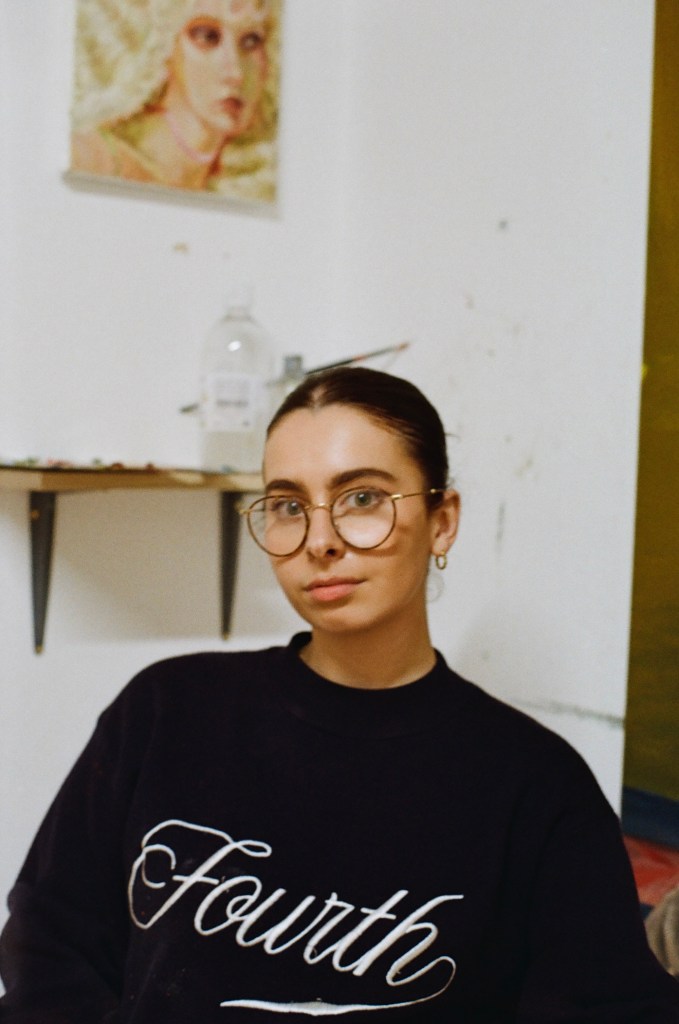
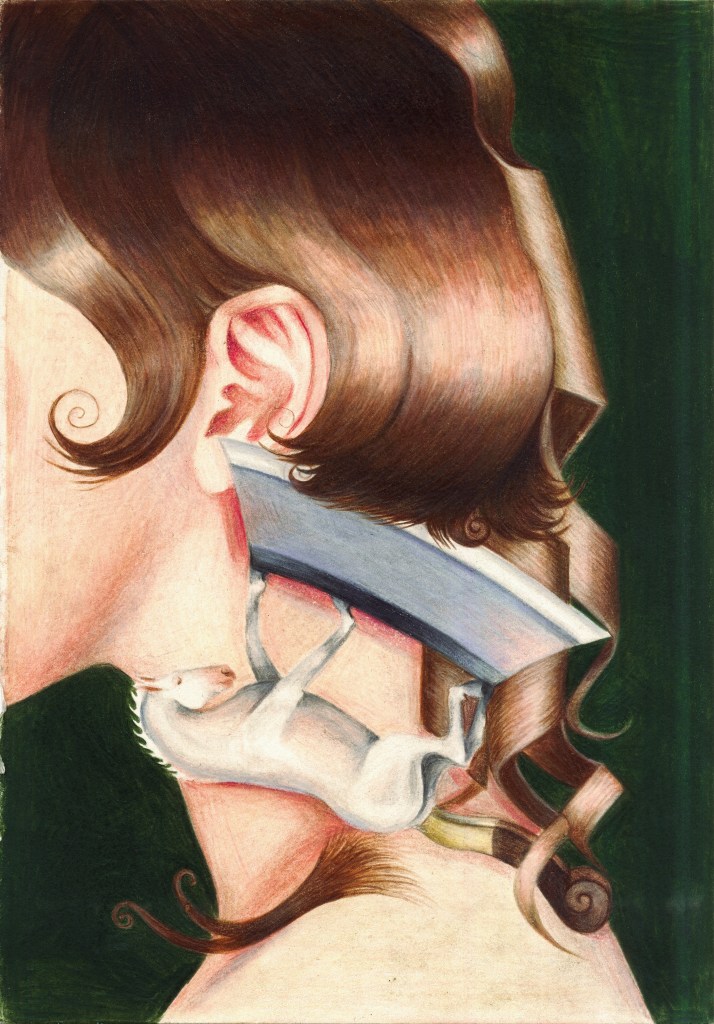
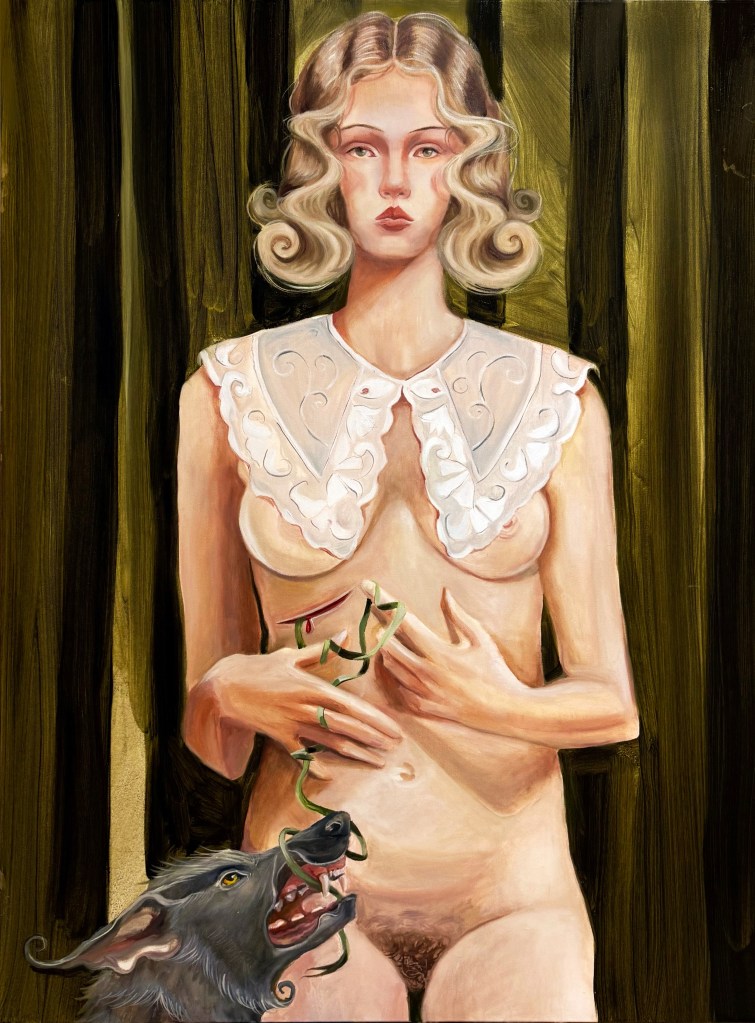
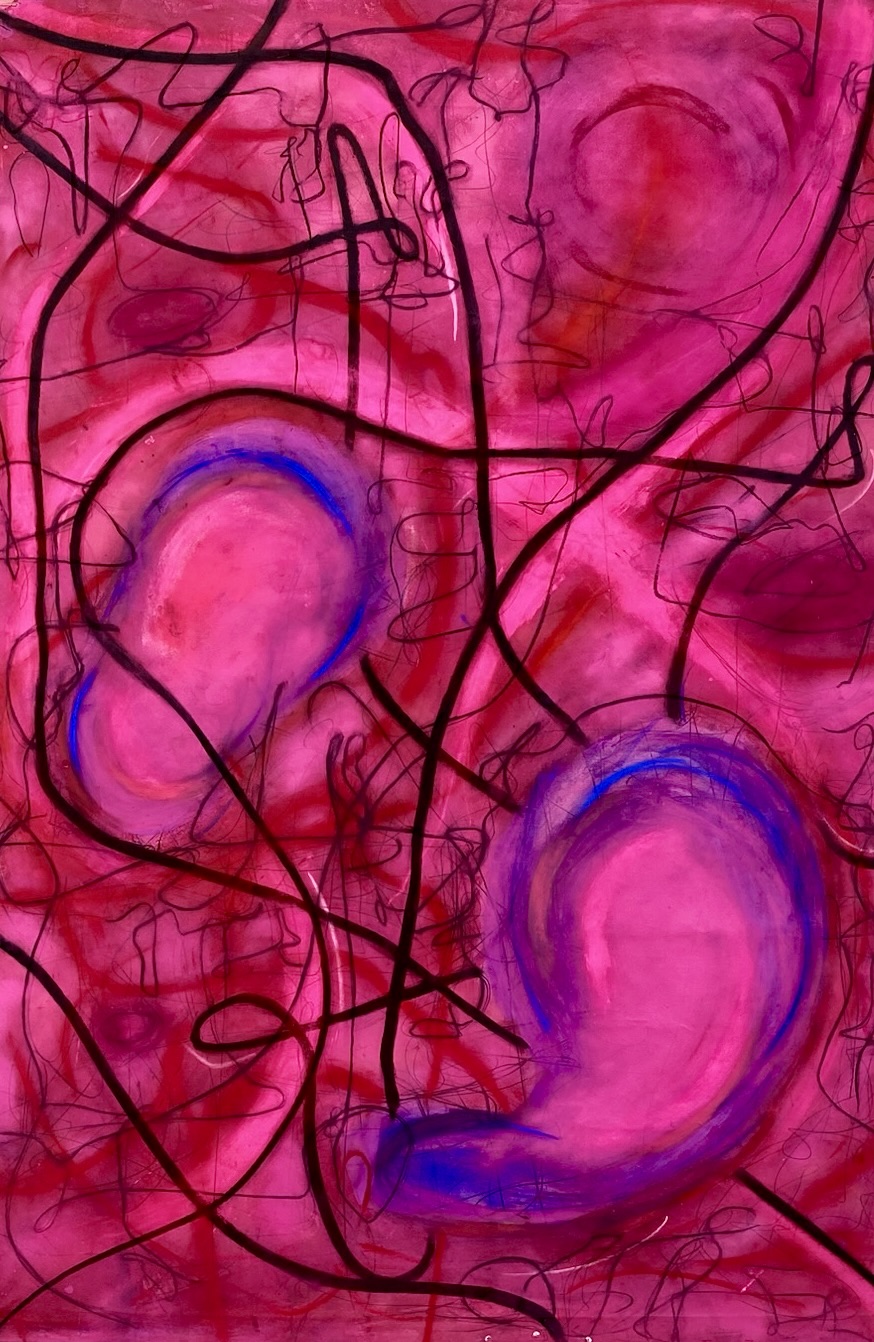
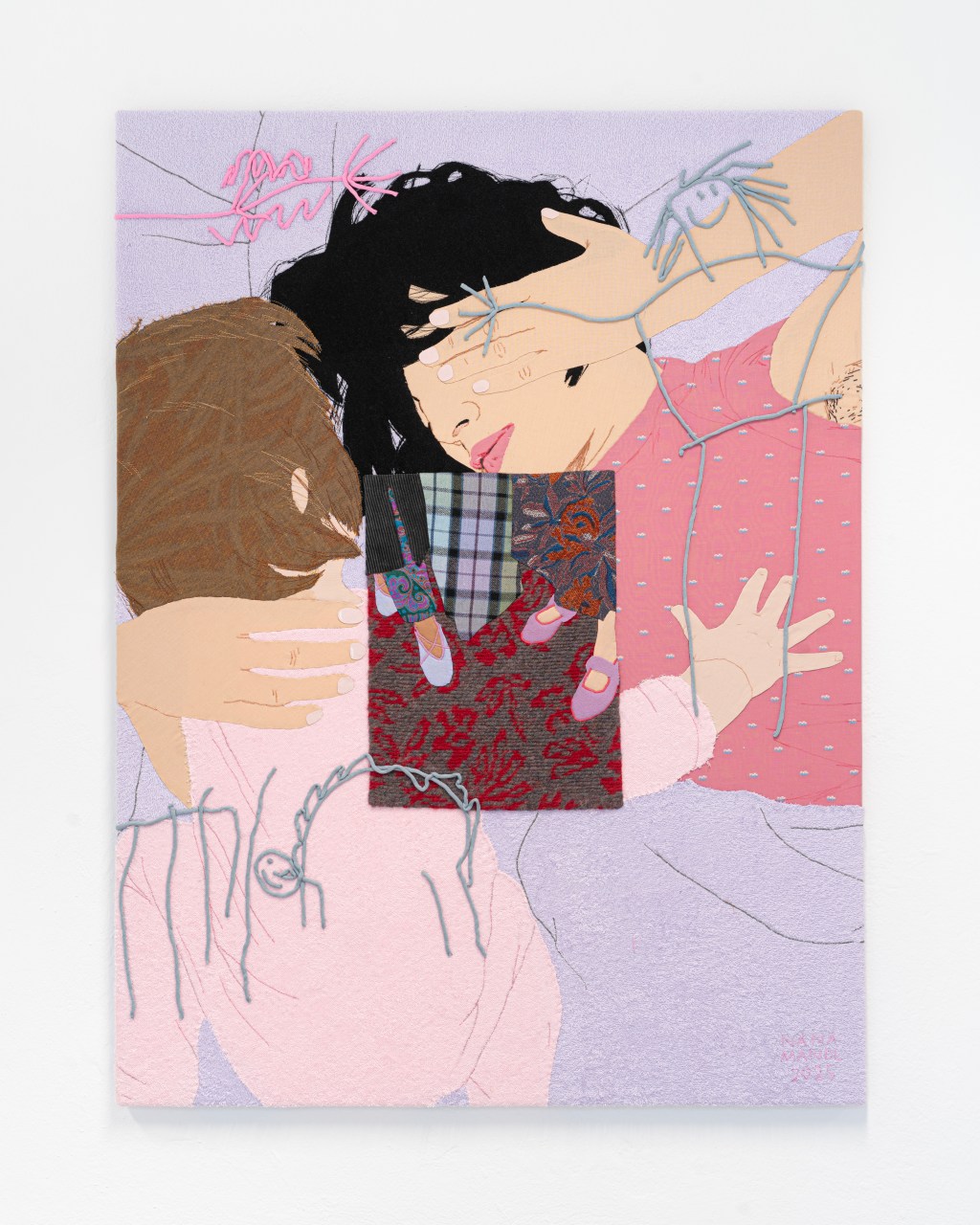
It’s interesting sometimes how things come full circle. When I saw Darcy’s works for the first time they, in snippets, reminded me of works by Leonora Carrington (and Leonora being the starting point for the whole Art Uncovered project). In the sense that, besides, for me, they’re partially giving off a similar atmosphere, but mainly because they are a masterful mix of being powerful and vulnerable at the same time. They open up their own world, inviting you in and moving you at the core.
For the following I asked Darcy if she wants to do an interview with me:
Luna Maluna Gri: Tell me a bit about yourself and your work.
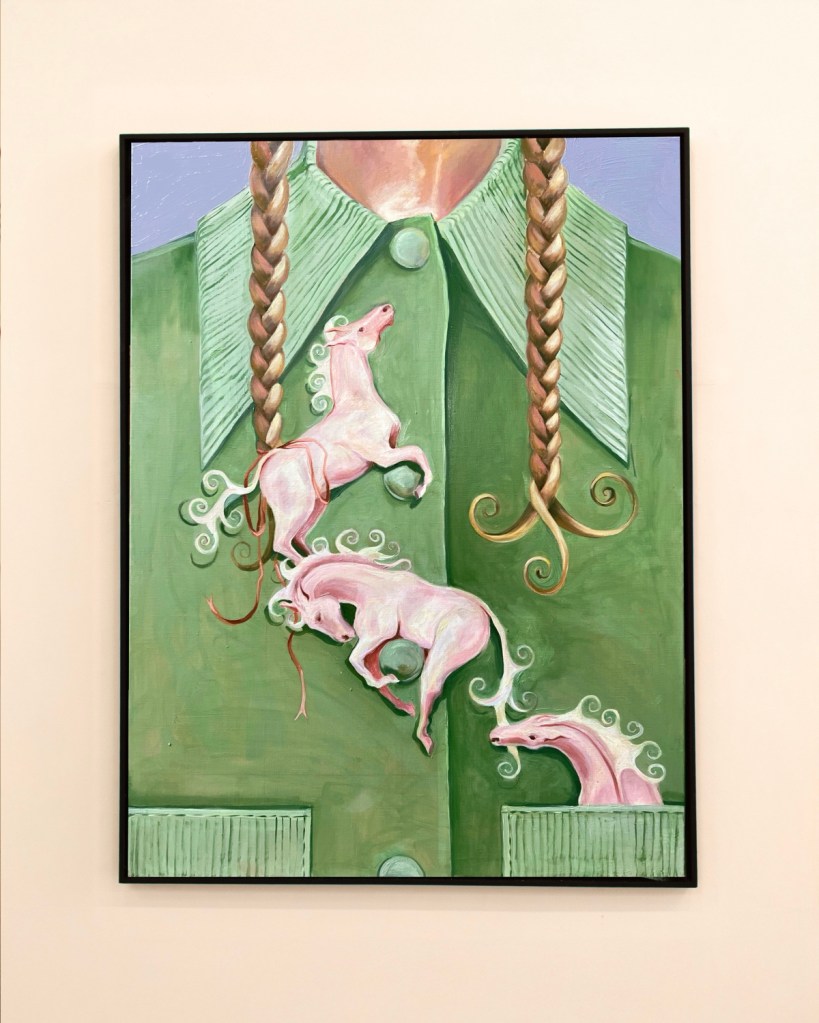
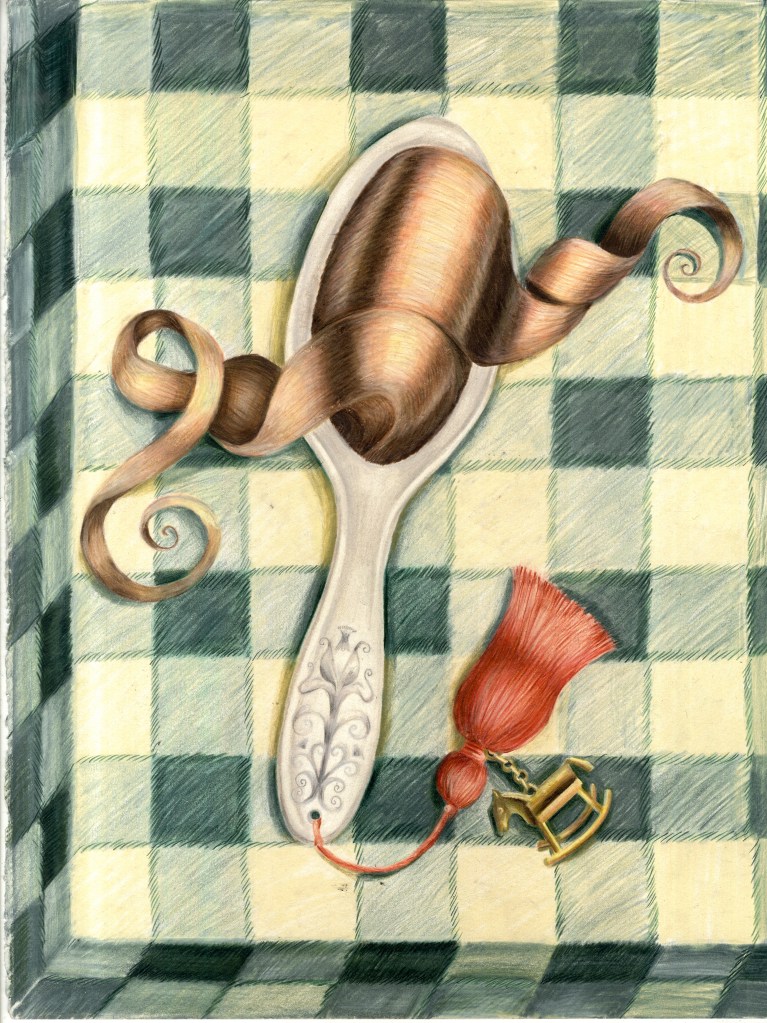
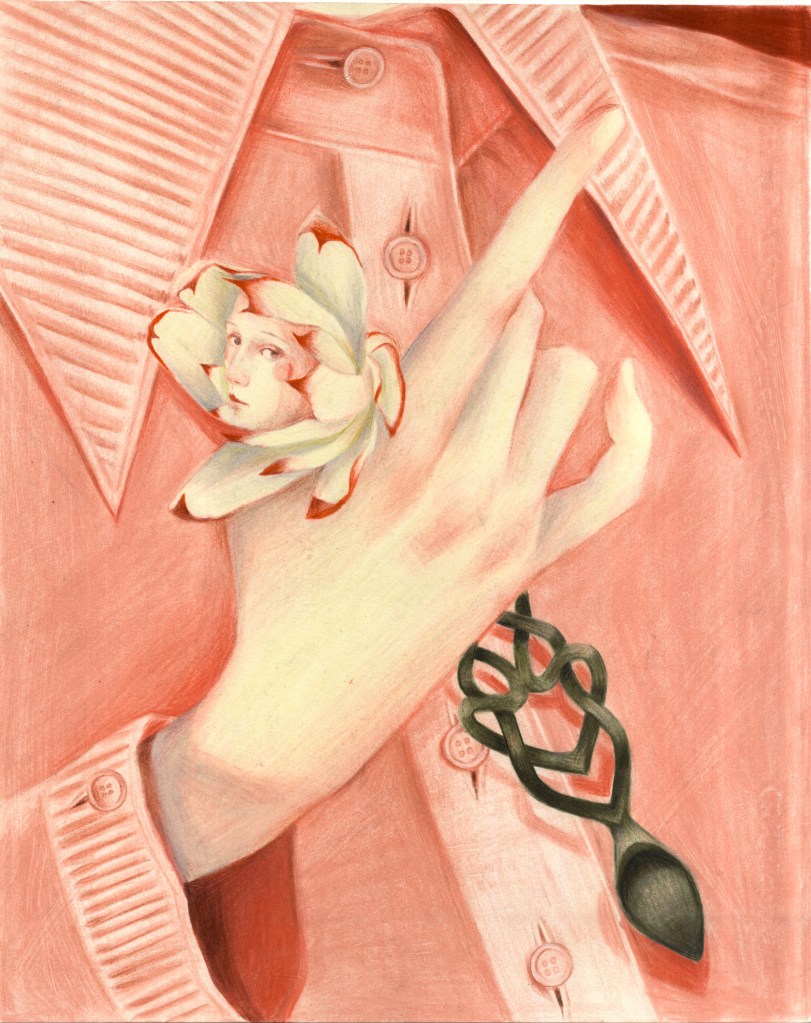
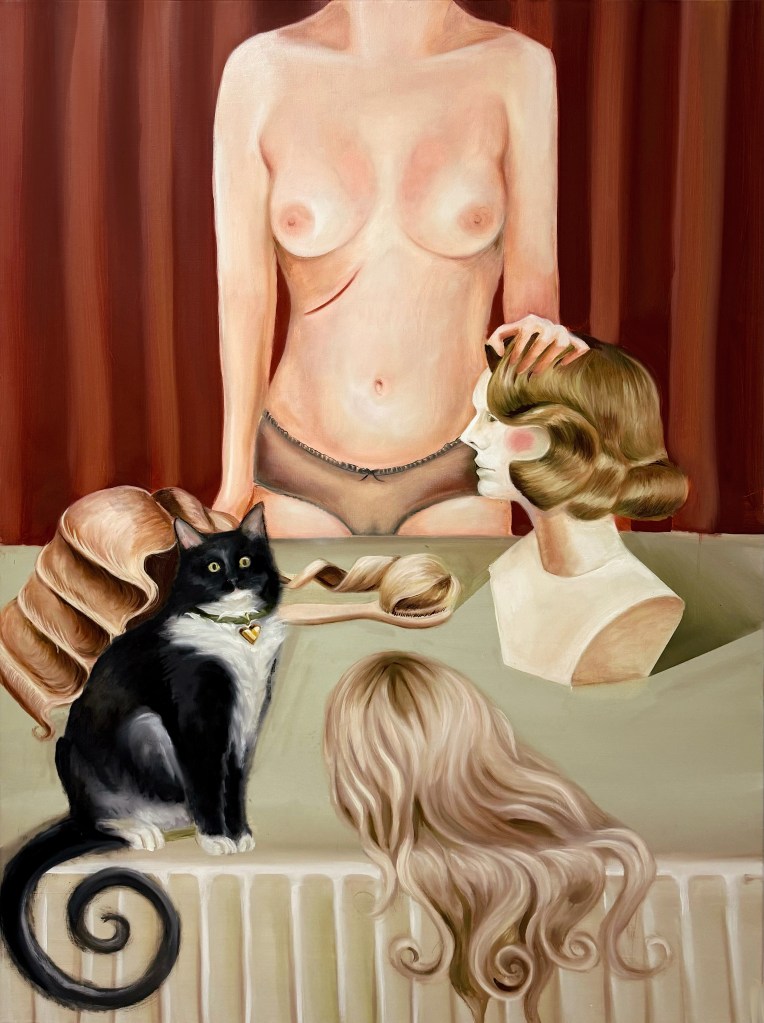
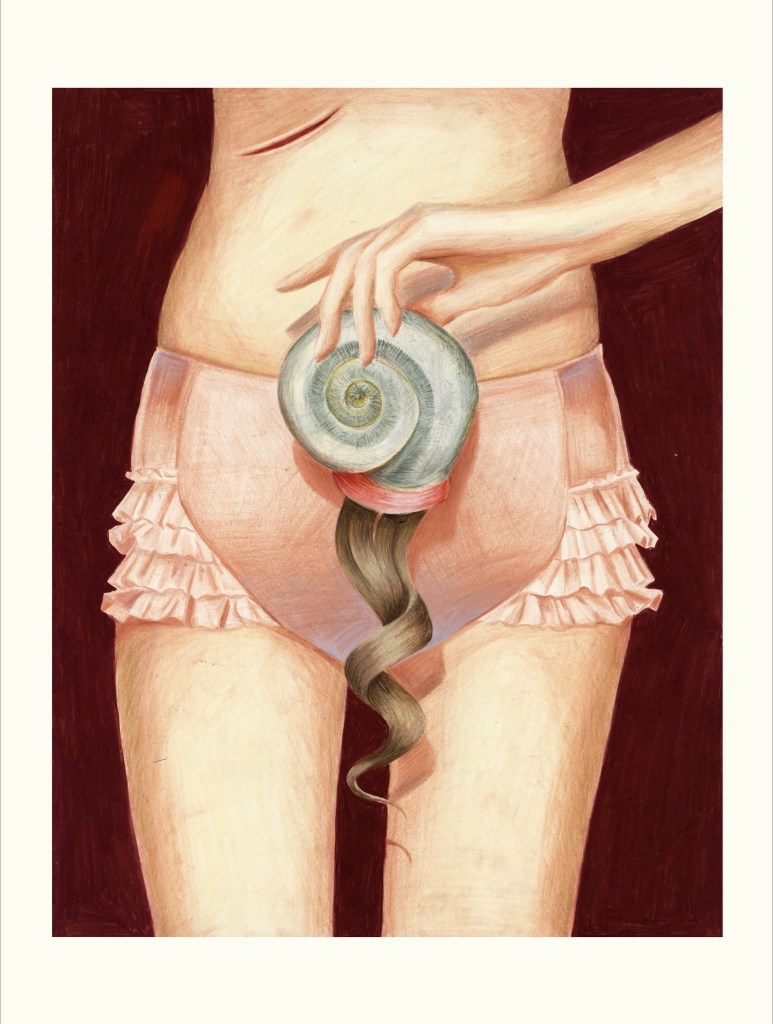
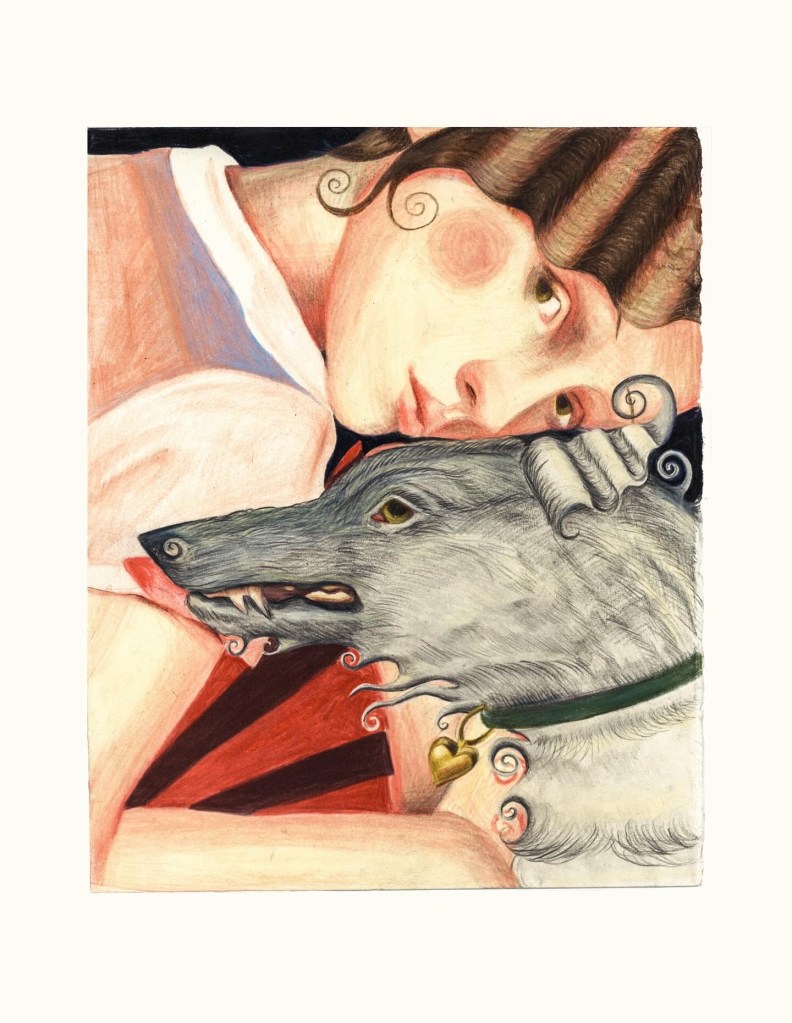
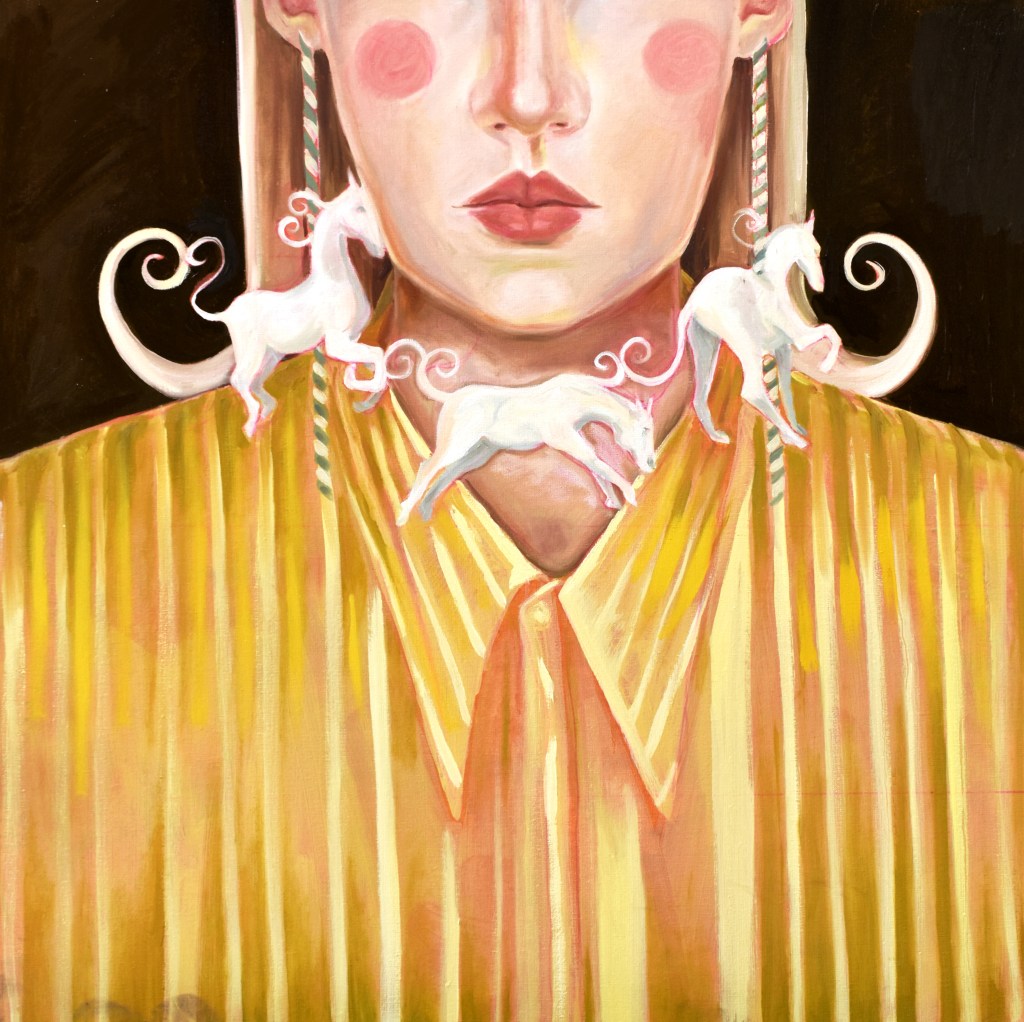
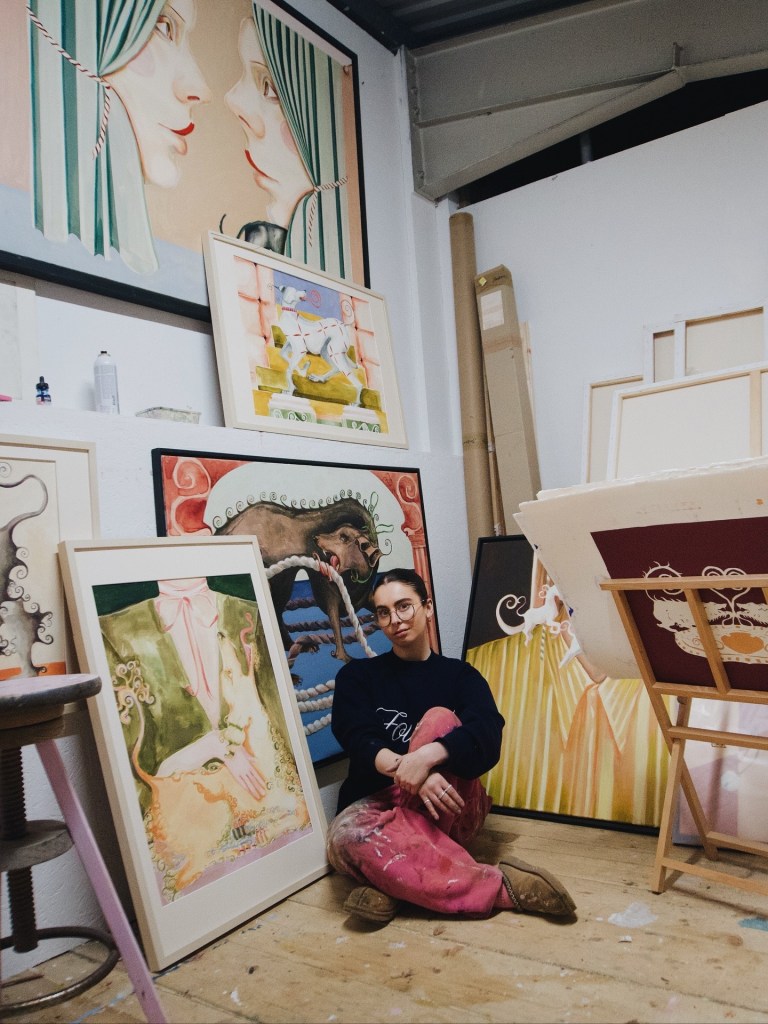
Darcy Whent: I’m an artist working primarily with painting and drawing, often alongside text and installation. My work tends to circle around domestic spaces, emotional memory, and the way personal narratives are shaped, altered, or softened over time. I’m interested in how images can hold contradictions — tenderness and discomfort, humour and grief — and how those tensions mirror lived experience rather than resolve it.
LMG: How and why did you start creating art?
DW: Art classes at school were vital for me. Growing up working class in a relatively isolated part of the Welsh valleys, they were one of the only consistent resources I had access to. They were also the only place where I felt capable — the one thing I seemed to be good at — and that mattered deeply. Those classrooms offered a sense of safety. They were spaces where attention slowed down, where I could focus, and where I felt held rather than evaluated. Making art became a way of understanding myself and my surroundings when other structures felt unstable or unreachable. That sense of refuge is something I still carry into my practice now.
LMG: What role does creating art play for you?
DW: Making work is a way of thinking slowly. The studio is one of the only places where I can sit comfortably with silence, without needing to fill it or explain it. It gives me time to stay with feelings or memories that don’t behave neatly. Art doesn’t solve anything for me, but it allows space for complexity, and that feels essential.
LMG: What does your creating process look like?
DW: My process is intuitive and often fragmented. I work across multiple pieces at once, letting images repeat, shift, or fail before they find a form that feels right. Drawing is often the starting point — it’s where ideas loosen up — and painting follows once something emotional begins to stick.
LMG: What inspires you?
DW: I’m drawn to everyday moments that carry emotional weight: overheard conversations, remembered rooms, objects that feel charged through use or neglect. I’m also influenced by storytelling — particularly the way stories change depending on who is telling them, and when. I’m interested in the often unspoken shift between girlhood and womanhood. A space without a clear title, where ideas of safety, vulnerability, and responsibility quietly reorganise themselves. That in-between state, and the way it frequently goes unacknowledged, continues to inform how I think about bodies, spaces, and memory in my work.
LMG: What is your experience with the art world?
DW: My experience has been mixed and formative. I’ve encountered generosity, mentorship, and real care, alongside precarity and imbalance. Being part of studios, residencies, and artist-led spaces has been crucial. Those environments feel more sustaining than purely institutional ones.
LMG: Is there something you want to change about the art world? If yes, what and why?
DW: I hope the conversation around class in the art world continues to deepen and become more actionable. Inclusivity can’t be symbolic. it needs to translate into real, sustainable pathways for people from working-class backgrounds to enter and remain in the sector. Artists are often expected to absorb small, cumulative losses as part of participation: unpaid labour, administrative work, deferred payment, or ongoing financial instability framed as normal. These aren’t just practical conditions, but ideological ones. They suggest that artists should subsidise the very systems that assess, select, and legitimise them. I’d like to see a shift toward structures that recognise this imbalance and actively work to redistribute responsibility and care.
LMG: What do you think is/are the role(s) of artists and art in our society?
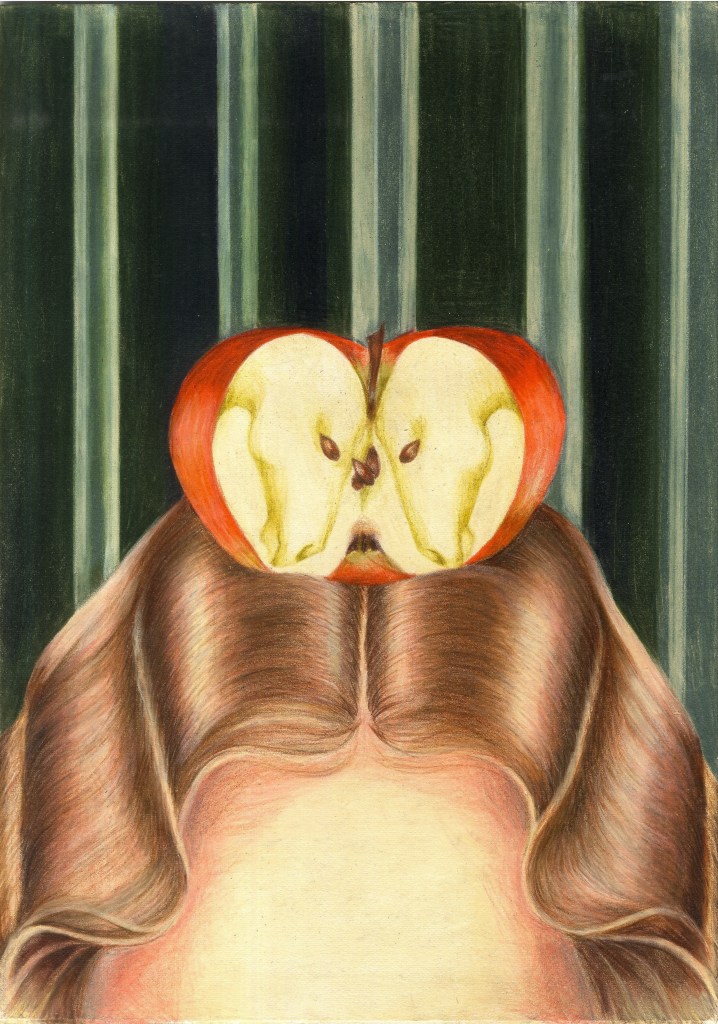
DW: Artists can make room for ambiguity. Art doesn’t need to instruct or convince. sometimes its role is simply to sit beside people in experiences that are hard to articulate, offering recognition rather than answers.
LMG: What artist(s) would you like to meet (dead or alive), and what would you ask them?
DW: I’d love to meet Louise Bourgeois and Paula Rego. Both artists found ways to work repeatedly through emotionally charged material without softening it or resolving it into something palatable. Their work holds discomfort, humour, cruelty, and care all at once. If I could ask them one question, it would be how they sustained such psychological intensity over a lifetime of making — and how they protected the work from being diluted as it became more visible and more widely understood.
LMG: Is there something you want to achieve in your art life? Dreams, future plans, or projects?
DW: I want to continue building bodies of work that unfold over time rather than rush toward resolution. I’m interested in exhibitions that feel immersive and emotionally layered, and in collaborations that blur boundaries between visual art, writing, and shared authorship.
LMG: Do you think there is something you can bring to the world through your work as an artist that you couldn’t in any other field?
DW: Art allows me to communicate without certainty. Through my work, I can offer a space where vulnerability, contradiction, and emotional messiness are not only allowed but valued. I don’t think that kind of communication translates easily elsewhere.
Credits to all photos and all artworks: Darcy Whent
Website: https://www.darcywhent.co.uk
Instagram: https://www.instagram.com/darcywhent/
 Art Uncovered
Leave a comment