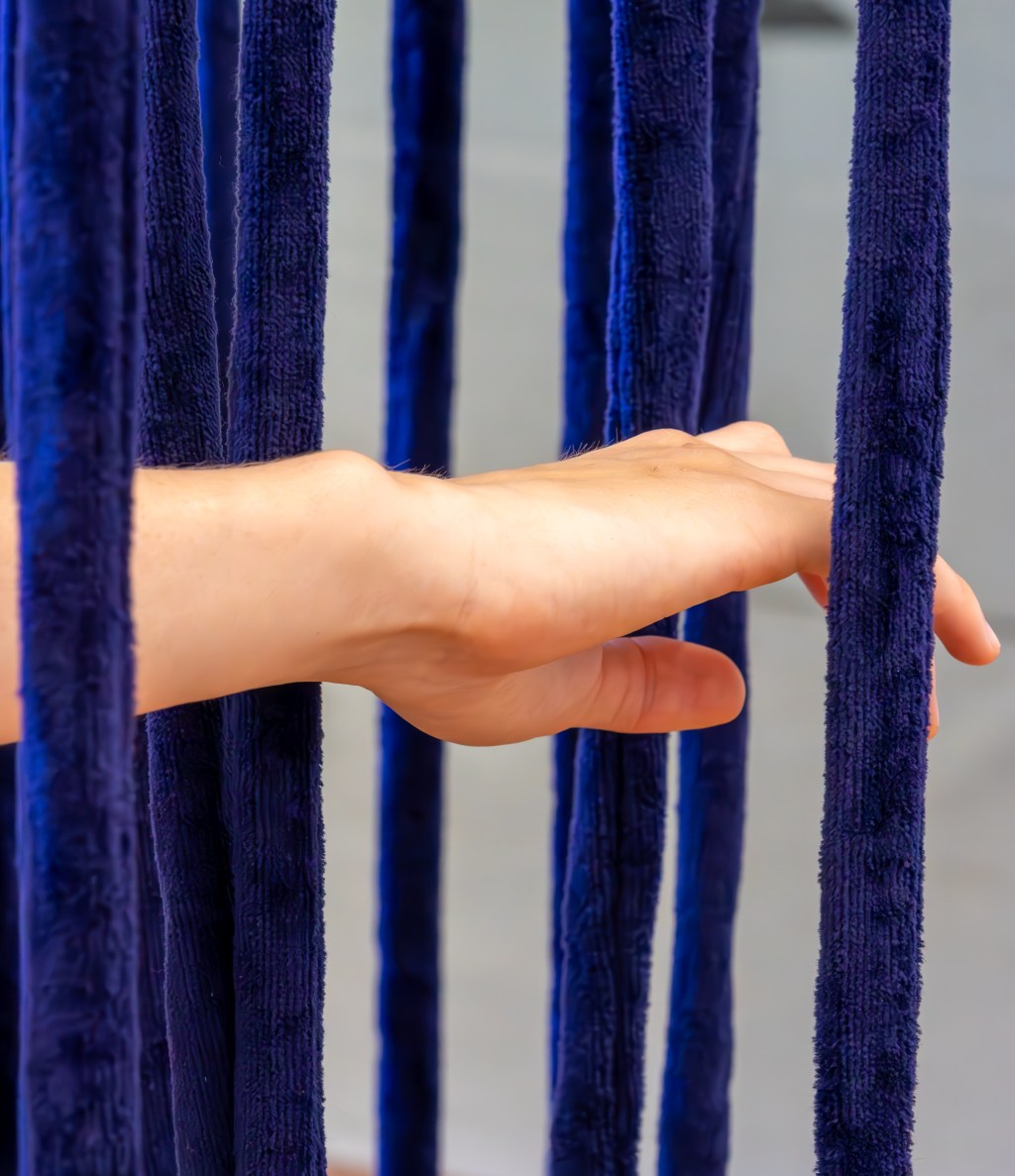
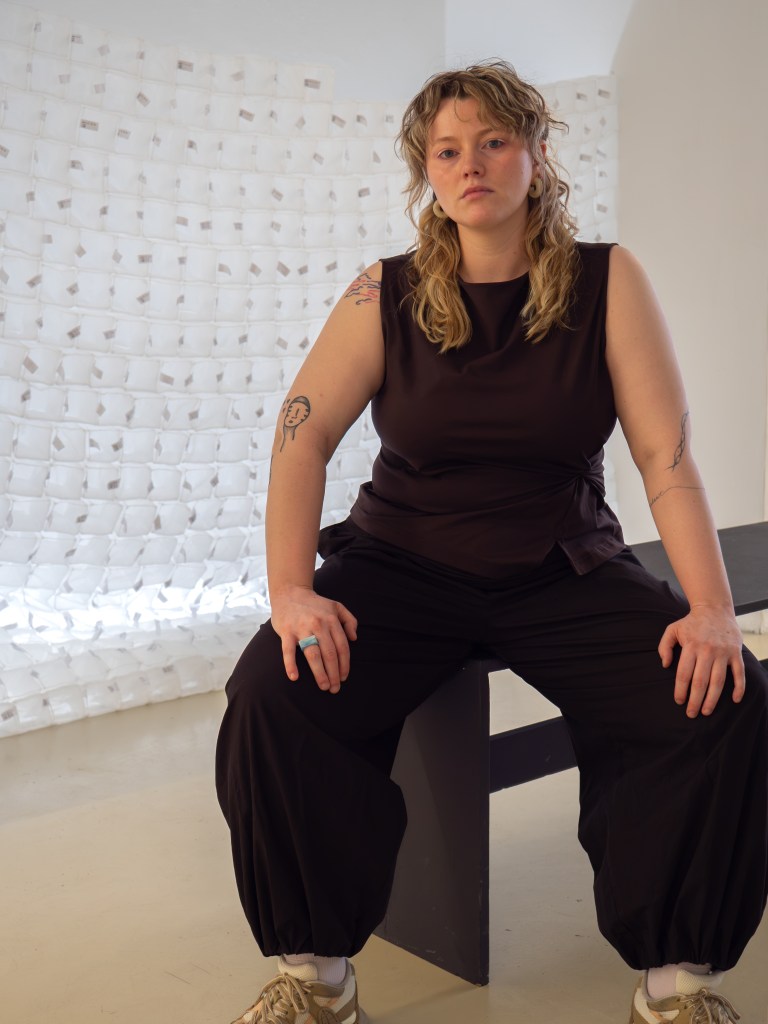
When I came across Lea-Maraike’s work, I was moved by it immediately. It connects softness with strength, vulnerability with power, and all interwoven with topics which make you think (and feel).
For the following I asked Lea-Maraike if she wants to do an interview with me:
Luna Maluna Gri: Tell me a bit about yourself and your work.
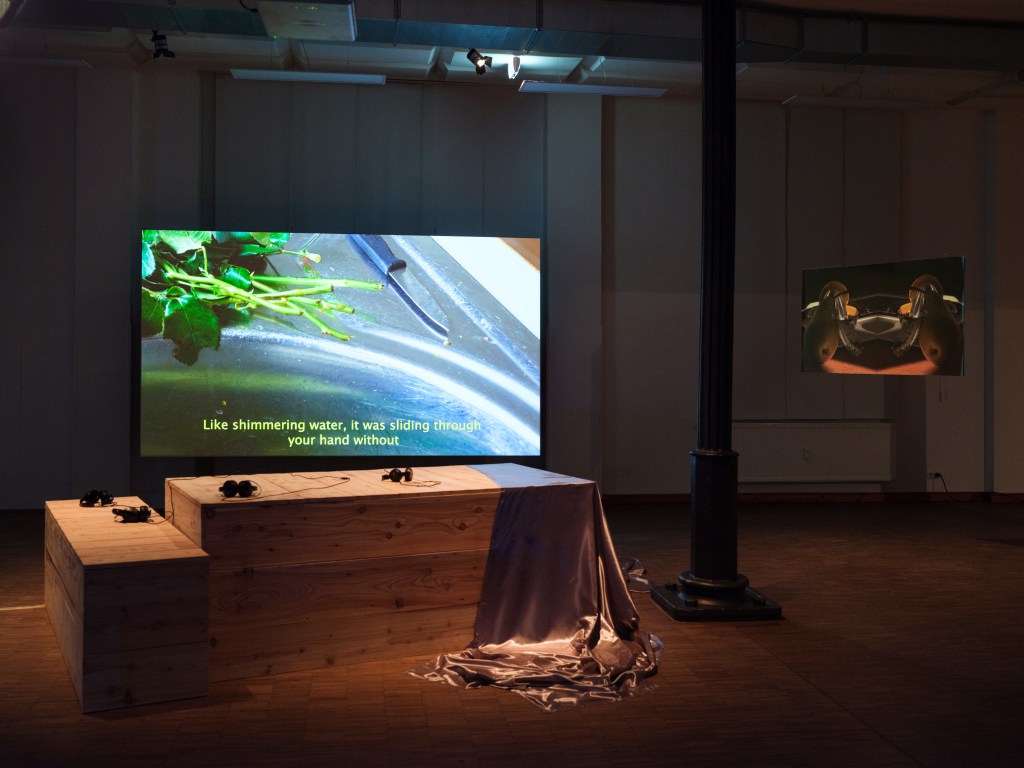
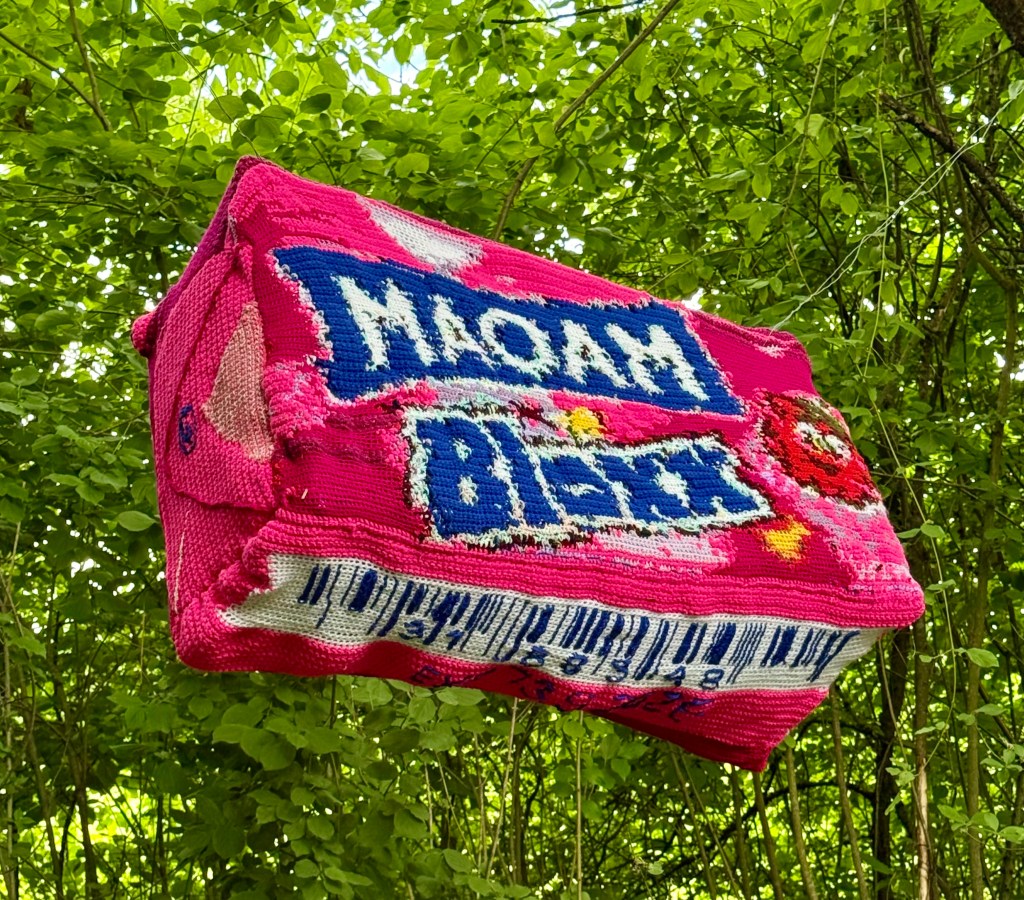
Lea-Maraike Sambale: My name is Lea-Maraike Sambale, I’m an artist, currently living and working in Vienna and my artistic practice is situated between soft tactile textures and digital surfaces. My current research is on the data economy behind menstrual cycle tracking apps and the question how we can create data sets that are not economically exploitable.
LMG: How and why did you start creating art?
LMS: While I was growing up, I was surrounded by a lot of very hands-on and crafty people, each with their own expertise and style. In a way, creating and being creative was simply something that surrounded me from an early age. It wasn’t until I started my studies that I began to refer to what I was doing as art and to consciously place it in an artistic context.
LMG: What role does creating art play for you?
LMS: For me, the creative process, or creating art, takes on very different roles. For example, my production processes often involve a lot of repetition and routine, and I really enjoy these highly focused moments of working with my hands. Another aspect is that I’m able to start a work from a very small detail I come across and then build a whole story around it. The process of making art consists of many different steps, but these are the ones I enjoy the most.


LMG: What does your creating process look like?
LMS: I find it difficult to completely separate creating art from my daily life because the two are constantly intertwined. Sometimes I record myself talking while walking down the street because I have a thought in my mind. I also have a collection of sounds on my phone because every now and then I hear a specific sound that I want to capture. Over time, this has grown into a larger collection. Sometimes these recordings become the starting point or a turning point in my research. Then there are moments when I’m not working on a specific project, and I try to spend a certain amount of time in the studio, documenting my thoughts through writing and sketching. I also think it is important to take seriously the act of being in the studio, even when I’m not sure what I’m doing there.
LMG: What inspires you?
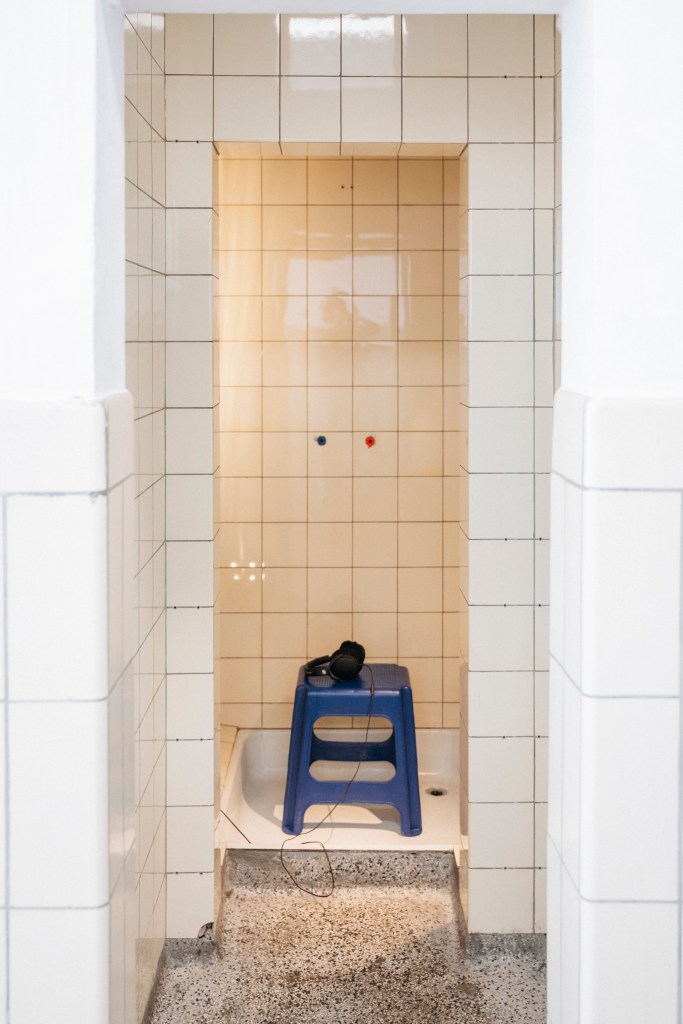
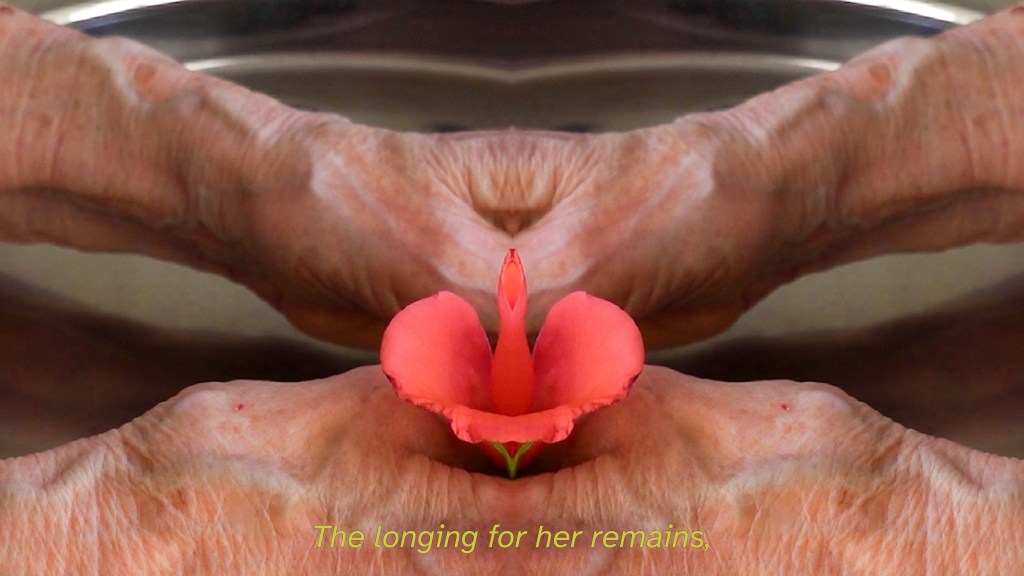
LMS: A lot! I love stories, and I’m very fascinated by surfaces and different textures, but also very much by bodies and how they move within spaces and in relation to one another. It’s often everyday gestures, sounds, or actions that raise questions, and then I start exploring them further.
LMG: What is your experience with the art world?
LMS: The art world itself, I think, consists of so many individual bubbles, and so far I feel like I’ve only experienced a very small part of it. Maybe what I can really speak about is the institutional setting of studying at an art university. My experience there is that it gave me a lot of time and also, not sure if I would call it security, but at least a sense of it to develop and identify with my own practice. It also gave me the chance to meet many incredibly interesting artists and connect with so many inspiring people. I’m very thankful for that time, so within this small part of the art world, that has been my experience.
LMG: Is there something you want to change about the art world? If yes, what and why?
LMS: There is a lot that needs to change in general. I think it’s very important to be careful when it comes to feedback and critique because there is a lot of power and also vulnerability in both giving and receiving feedback. I think we should be aware of that. Maybe that’s one of the smaller things I’m trying to actively practice myself.
LMG: What do you think is/are the role/-s of art and artists in our society?
LMS: In a way, speaking from a practice that is very much based on both theoretical and practical research, I see it as a great privilege and also a responsibility that I have a lot of freedom in how I make decisions within my practice and what I base my work on. Keeping that in mind, I think the only thing we as artists can do is to somehow leave traces behind that reflect on the world surrounding us and how it currently is.
LMG: What artist/-s would you like to meet (dead or alive) and if you had one question what would you ask them?
LMS: Georgia O’Keeffe, Johanna Walther und Yvonne Rainer – What sound is an integral part of your work?
LMG: Is there something you want to achieve in your art life? Dreams? Future plans? Or projects you would like to do?
LMS: I think there are different things. In my last projects, I started to collaborate more with other artists and with experts from different fields, and I would really like to explore that path further and see where it leads my interests, but also my practice. Another thing that comes up first, somehow more stability in a way.
LMG: I like that, it’s honest but also good to say it because it affects a lot of people, especially in this industry.
LMS: In so many ways.
LMG: And doing collaborations is also great.
LMS: Especially taking it out of the art bubble, I think, is very interesting, to enter an exchange with people who have their own ways of looking at questions or specific aspects, and who can all contribute something from their own perspective. I see so many possibilities there for collaboration and exchange, with so many different fields of expertise where everyone can bring something to the conversation.
LMG: Do you think there is something you can bring to this world, through your work as an artist, which you couldn’t in any other field of work?
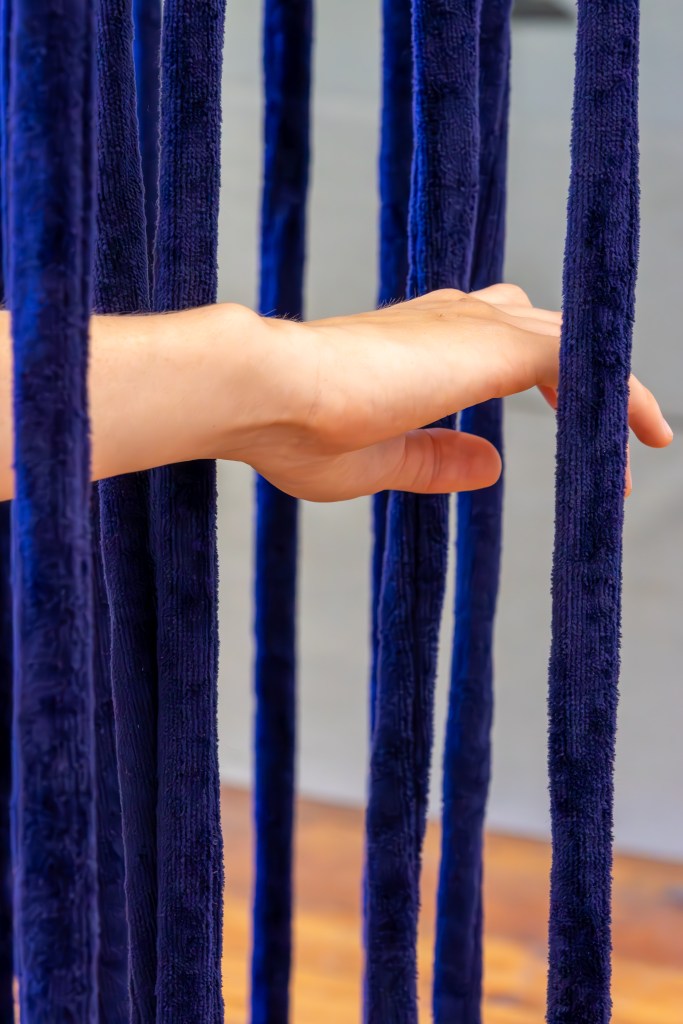
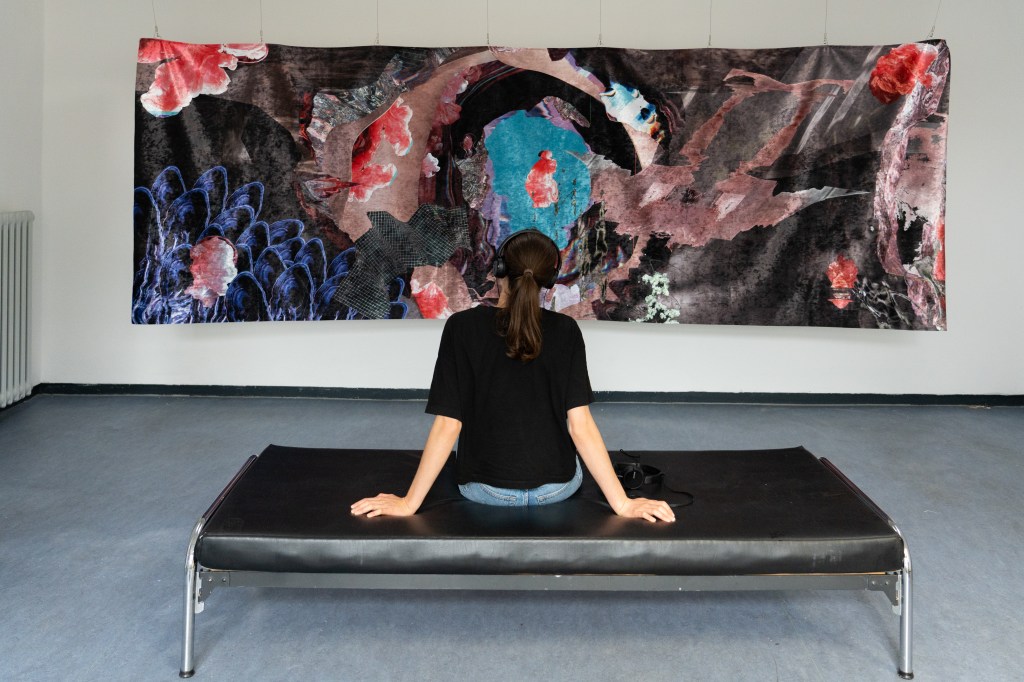
LMS: Maybe that’s also the loop to the first question talking about what my practice is like, because I said in the beginning that I work with textile and soft textures. I think that in a world that is becoming more and more dematerialized, working with textiles and tactile materials is my way of trying to keep the body present in the space.
Credits:
portrait photo: ©Cristian Anutoiu
2nd and 3rd photo: ©die Angewandte, 2026, Vincent Forstenlechner, CC-BY-NC-ND-4.0
4th, 8th and 9th photo: ©Lea-Maraike Sambale
5th photo: ©Isabel Hemberger
6th photo: film still from ‘is there still life?’
7th photo: ©Lukas Melzer
Website: https://leamaraikesambale.com
Instagram: https://www.instagram.com/leamaraike/


Leave a Reply