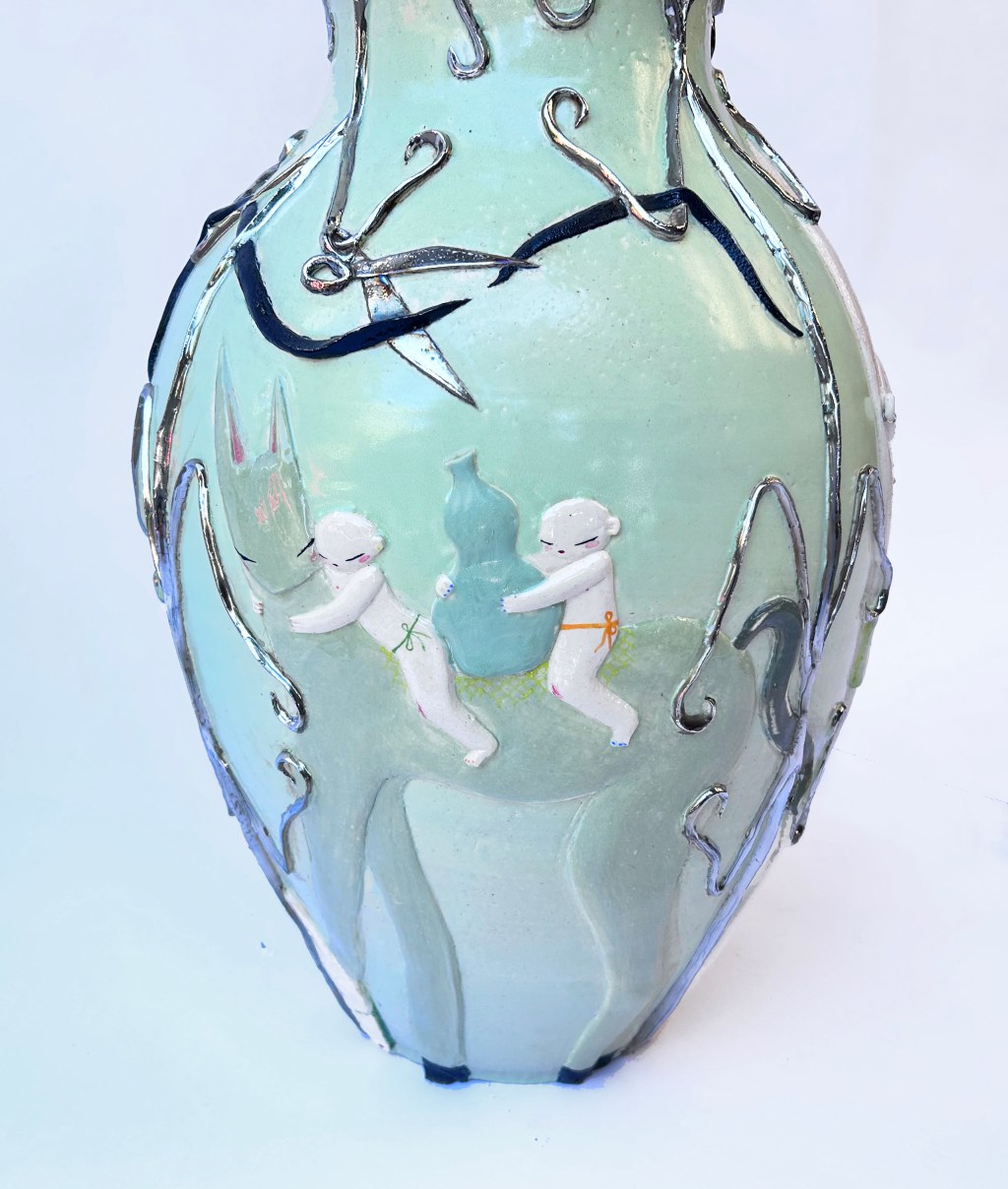
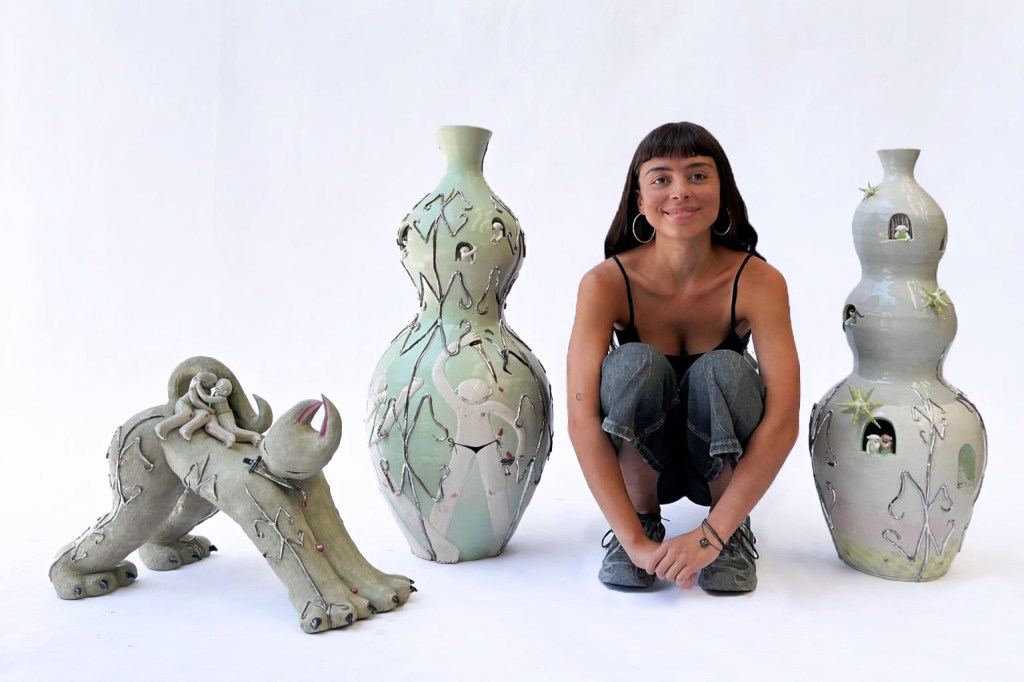
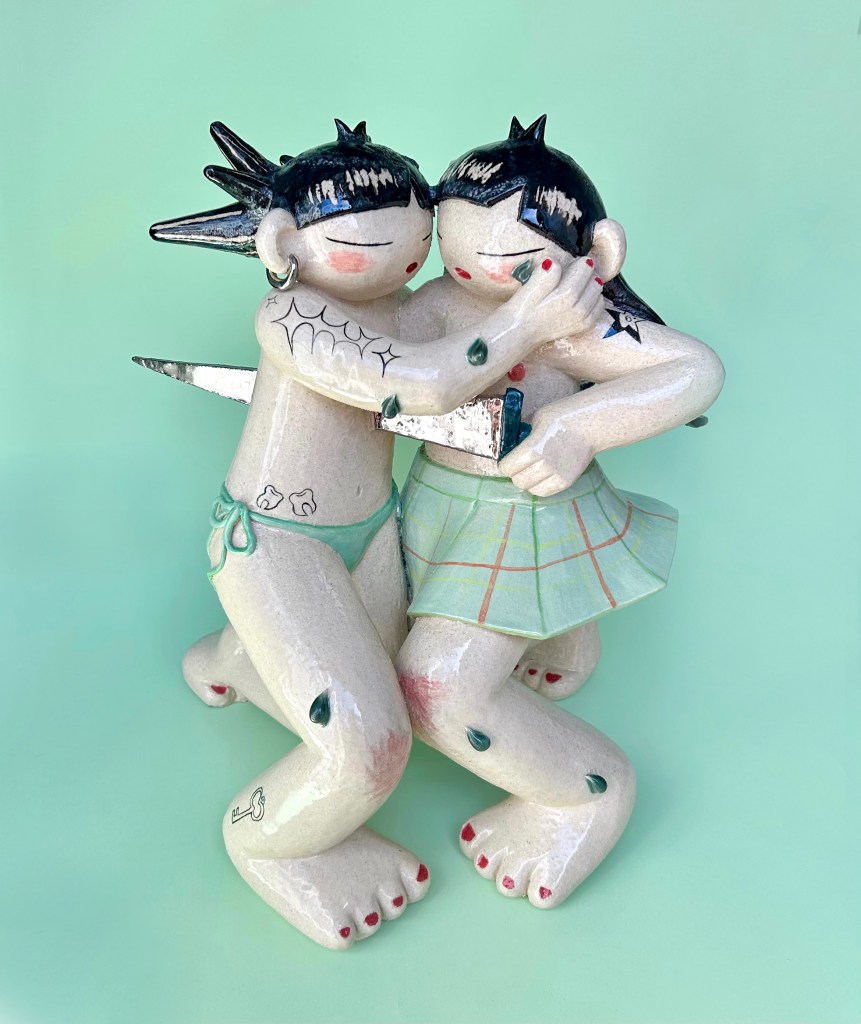
I came across Daniela’s work on Instagram and was intrigued by it at first sight. The characters she creates and through them the world they open up and in which you get invited in, are incredible. Strong but vulnerable at the same time and that being even more emphasized by the work being ceramics.
For the following I asked Daniela if she wants to do an interview with me:
Luna Maluna Gri: Tell me a bit about yourself and your work.
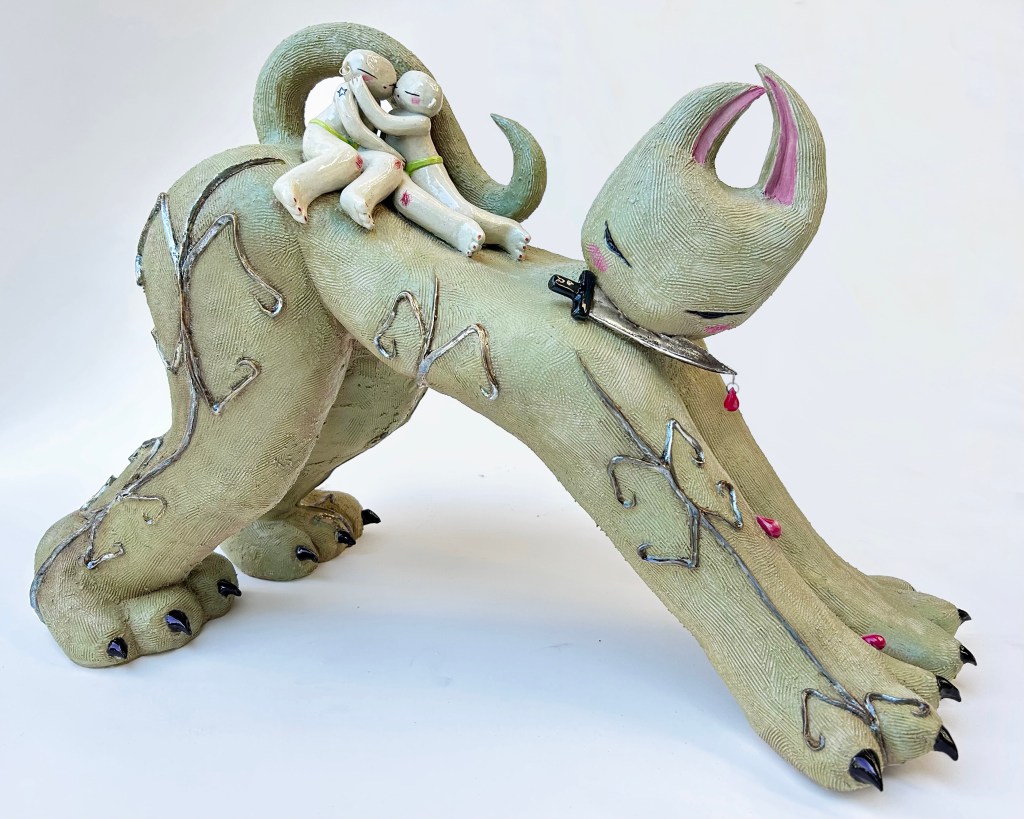
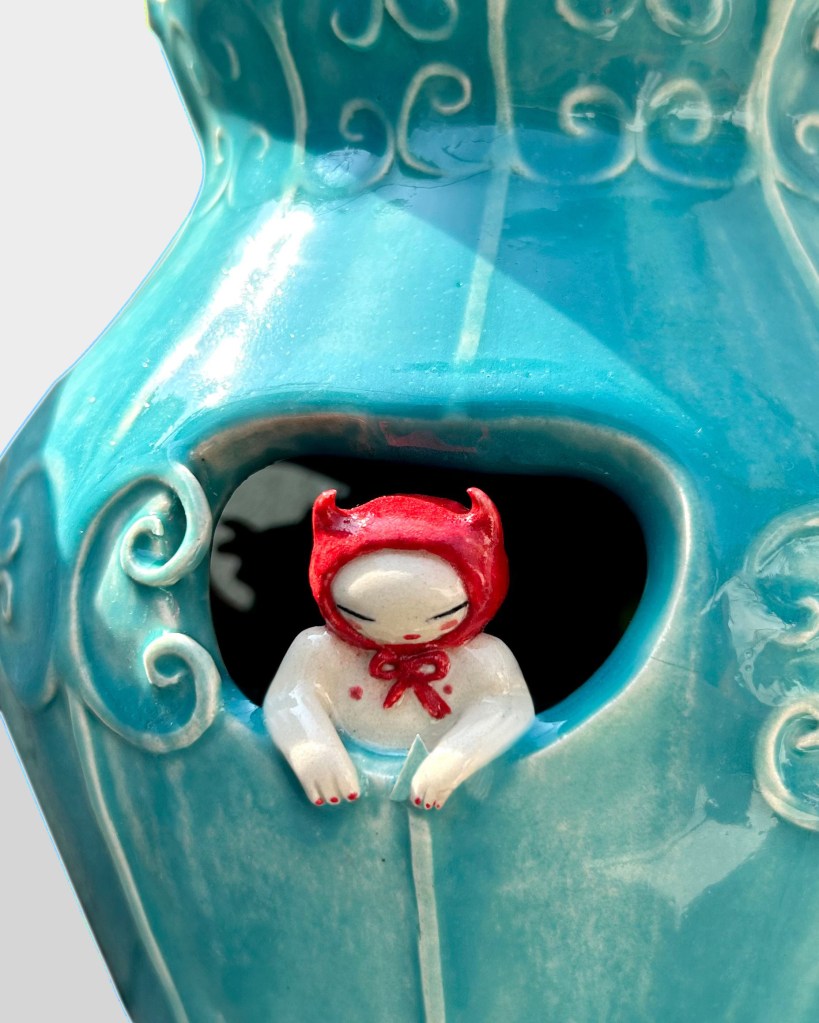
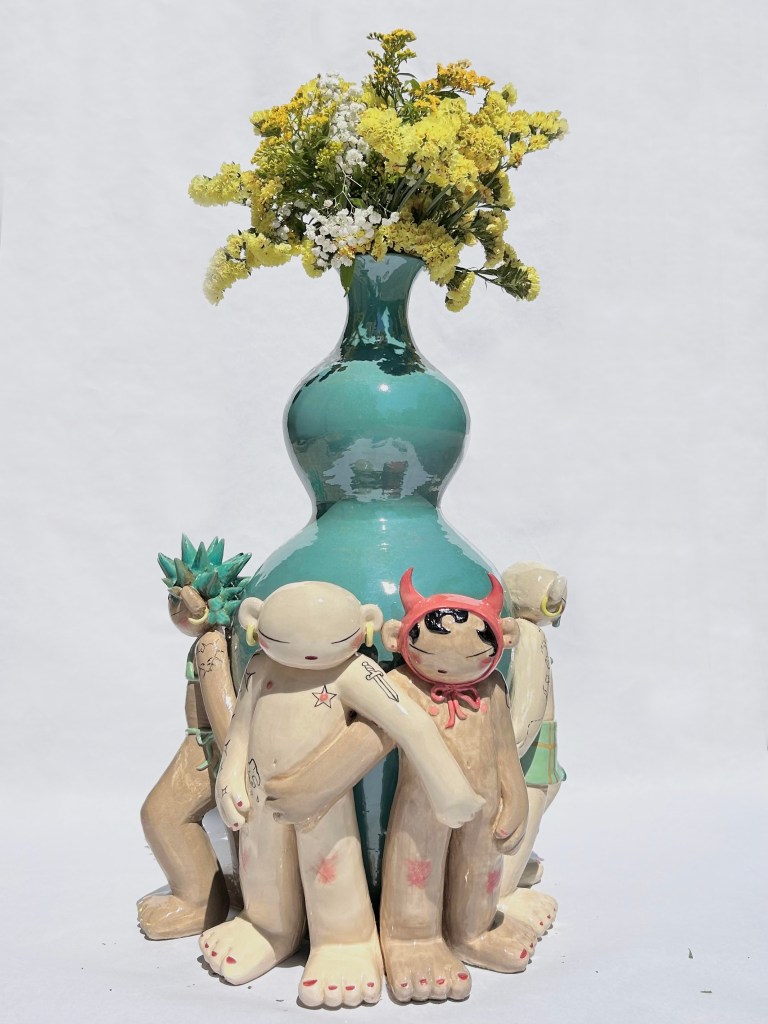
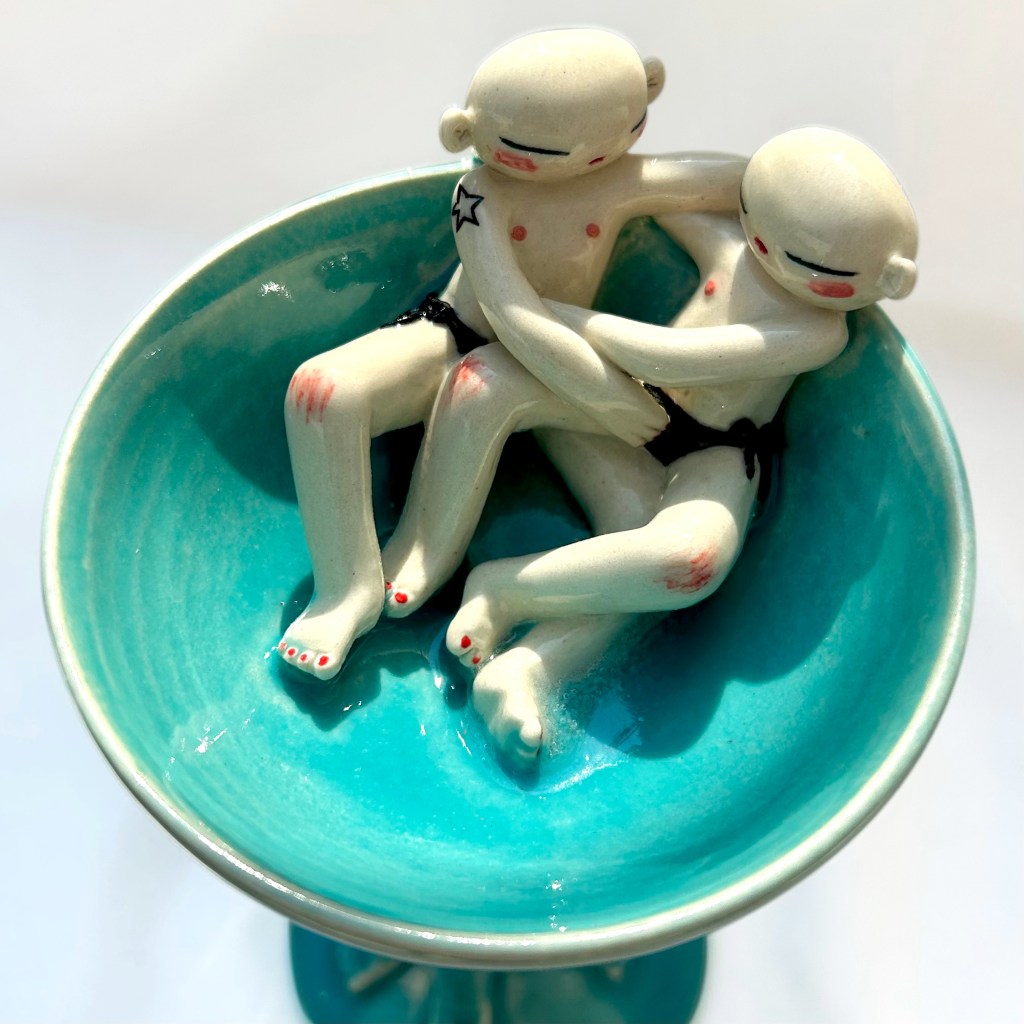
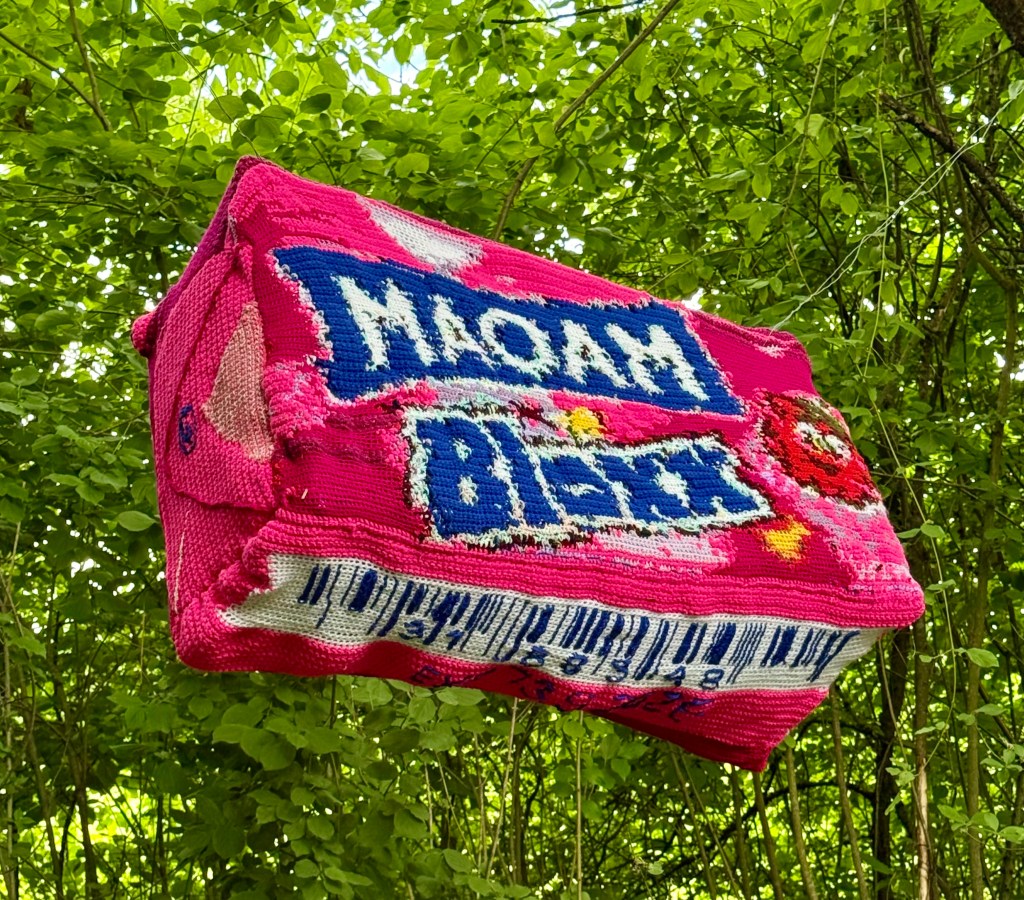
Daniela Nicotra: I am a 23-year-old artist currently based in Spain, working primarily in sculpture through the medium of ceramics. My practice emerges from the translation of the experiences and contexts that shape and traverse me, through the construction of a personal iconographic language that engages with historical and cultural references through reinterpretation. Understanding tenderness as both a political and affective position, my work explores themes such as identity,relationships, queerness, desire, the construction of intimacy, and the voyeuristic gaze, articulating them through a narrative and three-dimensional language.
LMG: How and why did you start creating art?
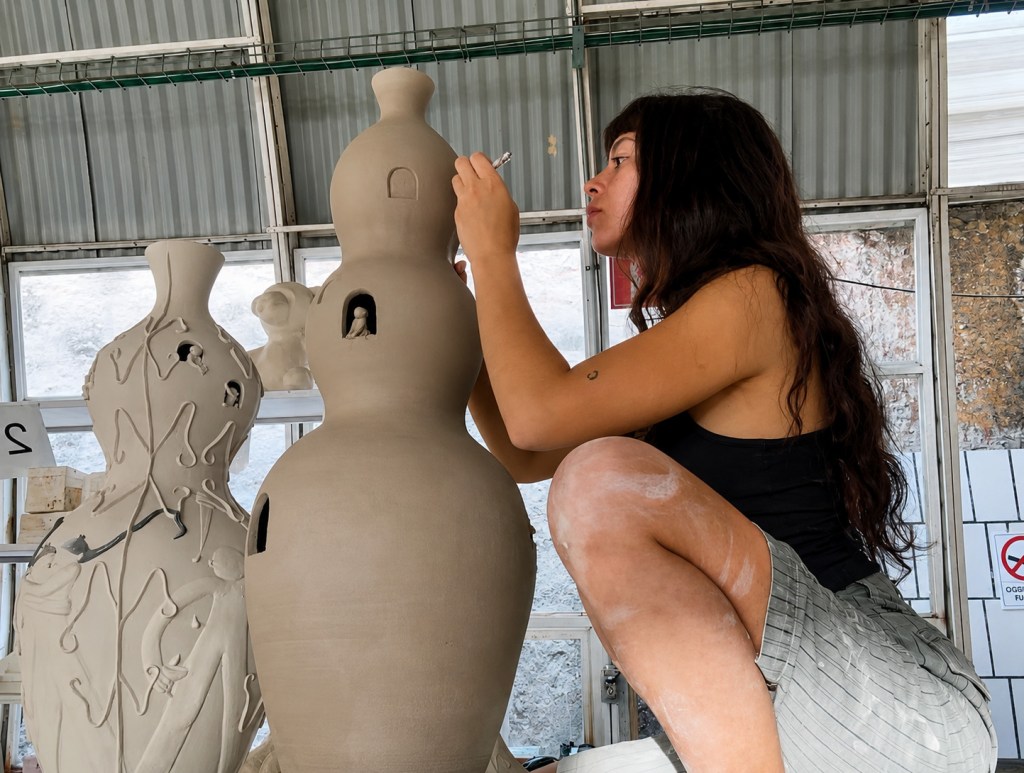
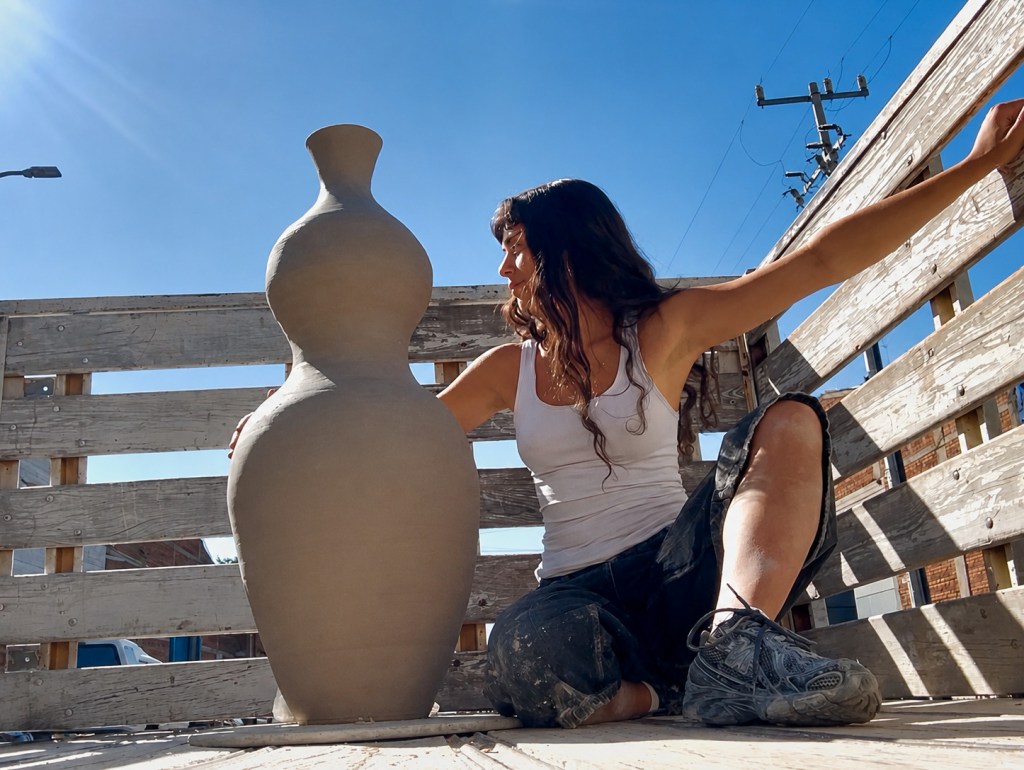
DN: It is difficult for me to identify a specific moment in a linear way, as creating has always been my way of digesting life and communicating with the world. Since childhood, I have always felt compelled to make things — drawing, painting, taking photographs, making comics, and experimenting with textiles, clothes, wood, air-dry clay, and whatever materials happened to cross my path. Sometimes even food became part of this impulse to create: pizzas, biscuits, and other ephemeral materials transformed into characters, images, and small worlds. I would invent stories for them, turning them into comics or bringing them to life through homemade stop-motion films. Making became my way of understanding and relating to the world through my hands, using whatever was available to me. My professional artistic engagement with ceramics took place after the pandemic, during a period marked by the need to return to the tangible and to materiality. Its ability to record gesture and to allow me to sketch in volume within space opened up an entirely new universe for me.
LMG: What role does creating art play for you?
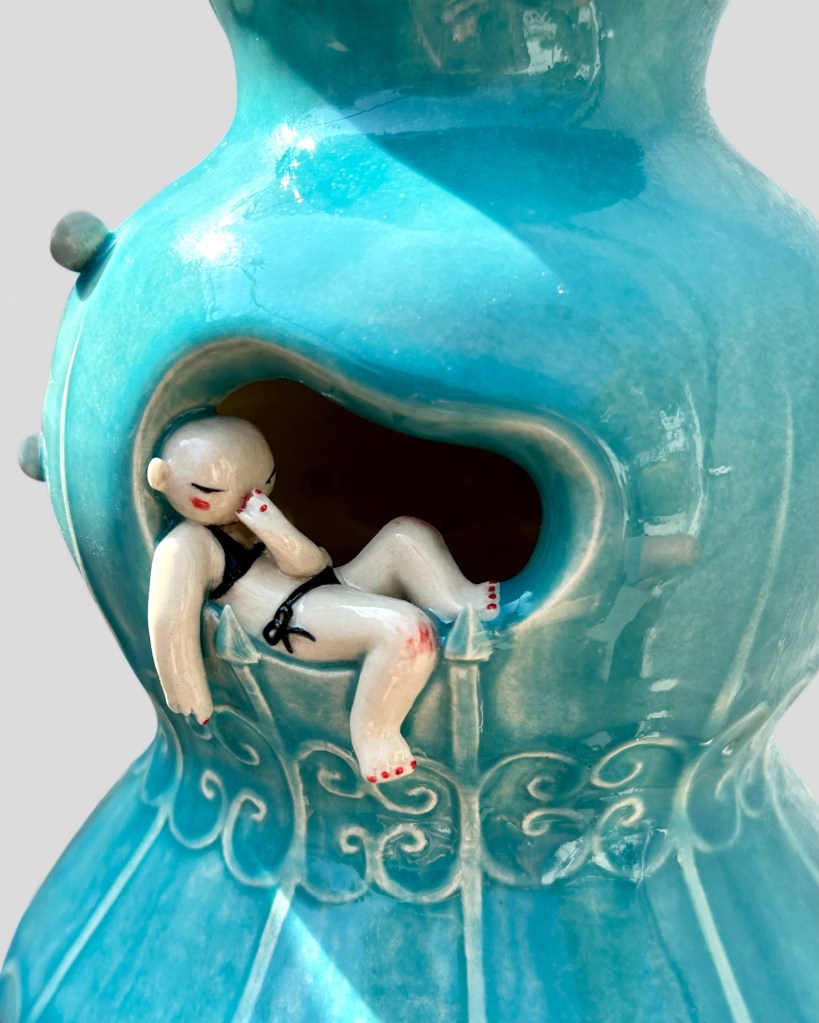
DN: For me, the act of creating is, in itself, a refuge: a place from which to exist, imagine, materialise, and reclaim. It is a space in which to share myself and question myself, where I can process what moves through me and unravel it. Creating is, in a way, a form of ritual that keeps me in touch with life and with things.
LMG: What does your creative process look like?
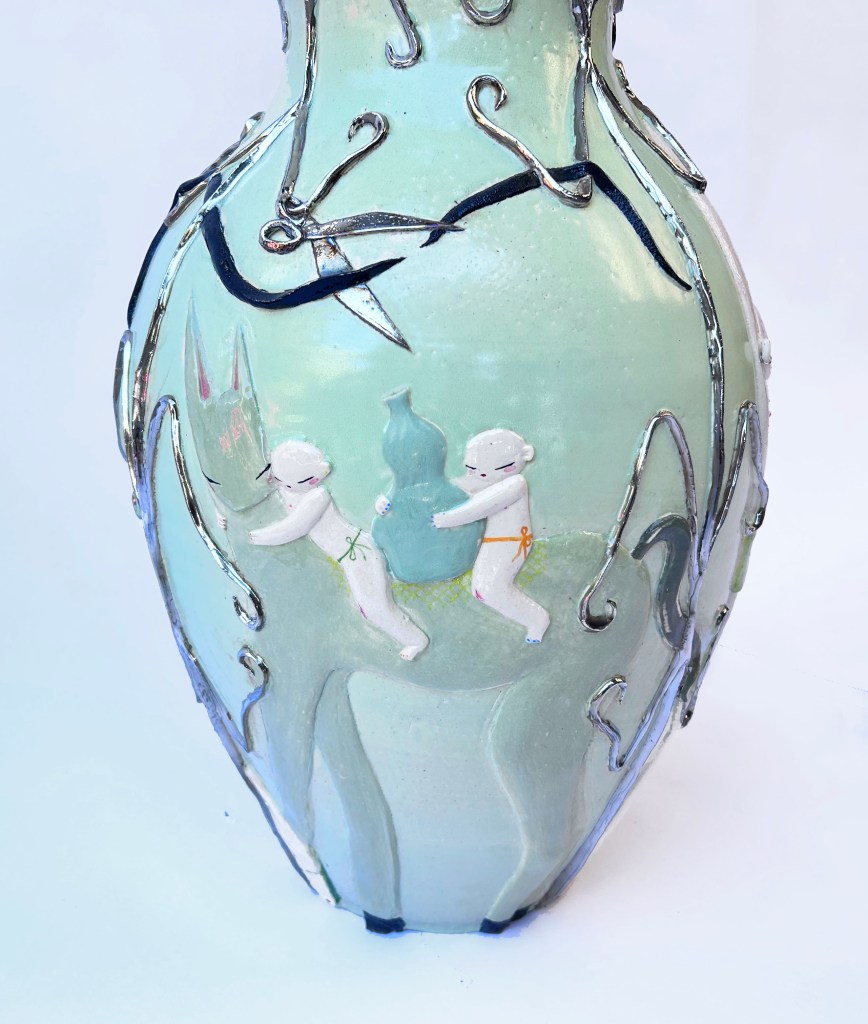
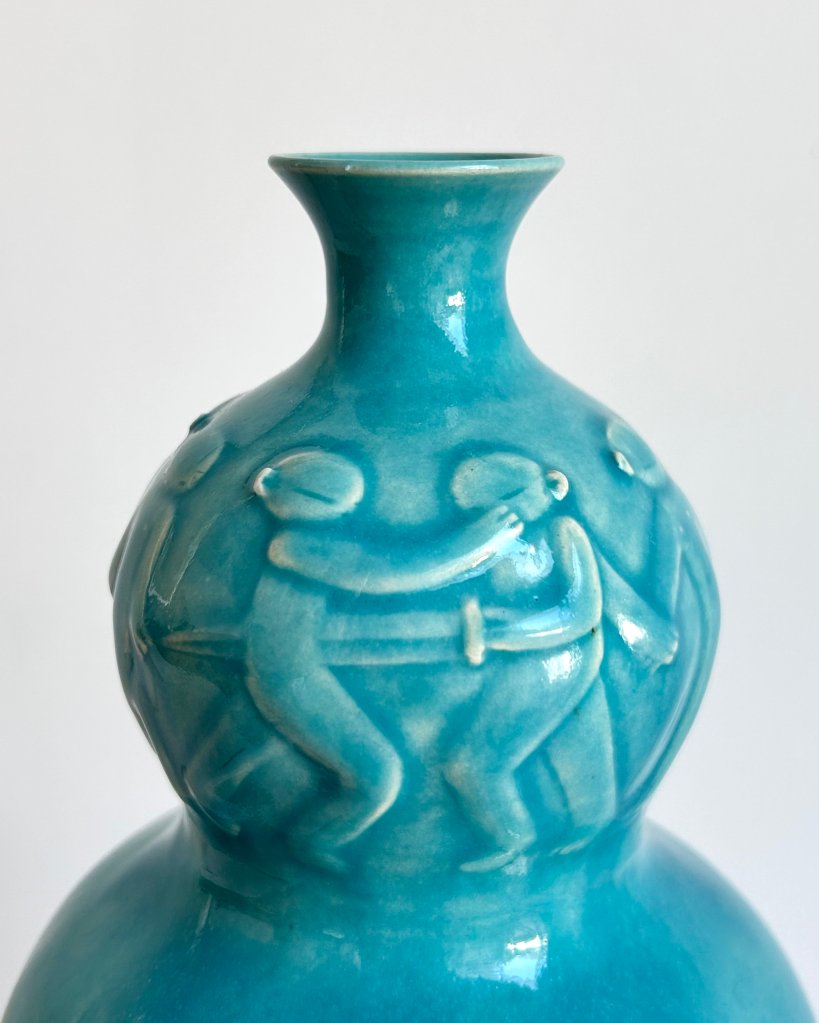
DN: It is an intentionally vulnerable process and, to a large extent, an intuitive one. I try to allow experiences, images, and affects to pass through me, and then filter them through a sensitive and politicised gaze. From this process emerge personal imaginaries and narratives, rich in iconography, which ultimately take shape through a contemporary and intimate perspective. From the moment my hands come into contact with the clay until the piece comes out of the kiln, I remain completely absorbed in what I am creating; the boundaries between the piece and myself begin to blur. It feels like dreaming with my hands for many days. Only when the piece emerges from the kiln do I see it with my eyes for the first time. Only then can I read what my hands have told the clay; the things I still did not know how to name. Iconography is powerful when it is traversed by the unconscious.
LMG: What inspires you?
DN: I am deeply inspired by observing how, throughout history, human beings have found different ways of representing themselves, interpreting themselves, and constructing meaning through images, narratives, symbols, and other formal languages. I am interested in understanding these codes, how they transform over time, and in what ways they can be unravelled and reinterpreted through a contemporary sensibility. I am fascinated by Pre-Romanesque and Byzantine miniatures, medieval bestiaries, and Romanesque reliefs of a narrative and, at times, obscene nature, as well as ex-votos, and other objects of popular devotion, alongside the dogū figurines of the Jōmon culture and various prehistoric figurines, for their symbolic power and their ability to condense forms of thought and representation. I am inspired by human experience itself: everyday life, intimacy, and that which surrounds me and passes through me. I am interested in thinking about the traces left by affects and experiences, and in how these ultimately translate into images, gestures, or symbols. Tarot also occupies an important place within my process, both as a creative and dialogical tool and as an iconographic archive; it becomes a way of unlocking images, codes, and narratives. Literature holds a fundamental place within my imaginary world. I am particularly drawn to magical realism, contemporary Gothic and Andean Gothic literature, queer literature and thought, and studies on the gaze, representation, desire, and affects. It is all of these experiences that ultimately filter into my work and become new images, iconographies, and narratives.
LMG: What is your experience with the art world?
DN: My mother worked at a cultural centre and my father is a carpenter, so I grew up surrounded by creative processes and environments. She would often take me to exhibitions and workshops, and for many years my father worked with wood in the living room of his home. There, I would build toys and small wooden dolls for my sister and myself, and I also used to sew stuffed characters. I grew up understanding creation as a natural way of inhabiting the world. Later on, I studied Ceramic Arts, specialising in traditional techniques, material chemistry, and sculptural practice. From the beginning of my career, I have felt the support of teachers, collectors, and friends who took an interest in my work and accompanied my process — support that was fundamental in allowing me to dedicate to my practice the time, value, and space it required. Alongside my artistic practice, I have worked as a gallerist, an experience that allowed me to gain a closer understanding of the dynamics and structures of the art world from a different perspective. I was also an assistant to the painter Ana Segovia, from whom I learned enormously, both practically and conceptually. More recently, I completed an artistic residency at Cerámica Suro in Jalisco, Mexico, an experience that allowed me to connect with other artists, curators, and cultural practitioners, and to broaden my perspective on the material, collaborative, and affective possibilities of contemporary artistic practice.
LMG: Is there something you want to change about the art world? If yes, what and why?
DN: Yes. I feel a certain disillusionment with the way the art world is often shaped by the logics of the market and speculation. I understand that art needs ways of sustaining itself economically, but I am concerned that its value ultimately comes to be measured primarily through commercial criteria. I believe that art is part of culture and that, as such, it should remain a public, accessible, and shared space. I am interested in an art practice capable of generating thought, community, dialogue, and genuine connections with people, beyond its market value or the dynamics of exclusivity that so often permeate the art system.
LMG: What do you think is/are the role(s) of artists and art in our society?
DN: I believe that art functions as an anchor that allows us to connect with human experience itself, and also to disconnect from it. Artists are, in a way, the sensitive filter through which an infinity of collective information is translated, reorganised, and takes form. Art does not merely reflect reality; it also reconfigures it within us and through us.
LMG: What artist/artists would you like to meet (dead or alive) and if you had one question what would you ask them?
DN: I deeply admire Miriam Inez da Silva. Much of her artistic career developed during the Brazilian military dictatorship. Within a profoundly restrictive context, marked by censorship and the persecution of artists, intellectuals, and cultural movements, she managed to build a deeply provocative and transgressive practice. Paradoxically, her work was able to circulate because it was read through a colonial, elitist, and deeply sexist lens as naive, artisanal, or minor production. To some extent, that underestimation became a space of possibility from which she was able to develop a language of her own, charged with political, symbolic, and critical power. If I could ask her one question, I would ask her how she internally sustained that tension between the external reading of her work and the political and symbolic complexity that she knew it contained, and what enabled her to remain faithful to her own language within a context marked by censorship, violence, and silencing.
LMG: Is there something you want to achieve in your art life? Dreams? Future plans? Or projects you would like to do?
DN: I would like to always be able to give artistic creation the time, care, and attention it deserves. For me, it is important to protect creative processes from the dynamics of speed, efficiency, and productivity that characterize contemporary capitalism, and to allow myself space for research, transformation, experimentation, and failure. I believe that artist residencies are especially important in sustaining this way of working, which is why one of my main goals is to take part in those I am able to, in different parts of the world. I am interested in encountering other contexts, learning from different ways of making, and allowing each place — its rhythms, culture, and the people who inhabit it — to transform my practice. In the meantime, this September I will join Chaiz Estudio in Carabanchel, Madrid, an artist studio and curatorial space directed by Arturo F. Peral, where I will develop my work and share a space with other artists whom I deeply admire and with whom I have several collaborations in the making that I am particularly excited about.
LMG: Do you think there is something you can bring to this world through your work as an artist which you couldn’t in any other field of work?
DN: I believe that everyone has something to express and different languages through which to do so. I do not believe that there is anything that can only be contributed through the arts, nor that they are more important than other forms of expression. That being said, my work is the language through which I think, understand, and relate to that which passes through me; I cannot imagine myself anywhere other than creating. I know that this is my way of being in and contributing to the world, just as other people do through science, literature, architecture, or any other field. I do not believe that one language is superior to another; this one simply happens to be mine.
Copyright to all photos and all artworks: Daniela Nicotra
Instagram: https://www.instagram.com/malaydolce/


Leave a comment